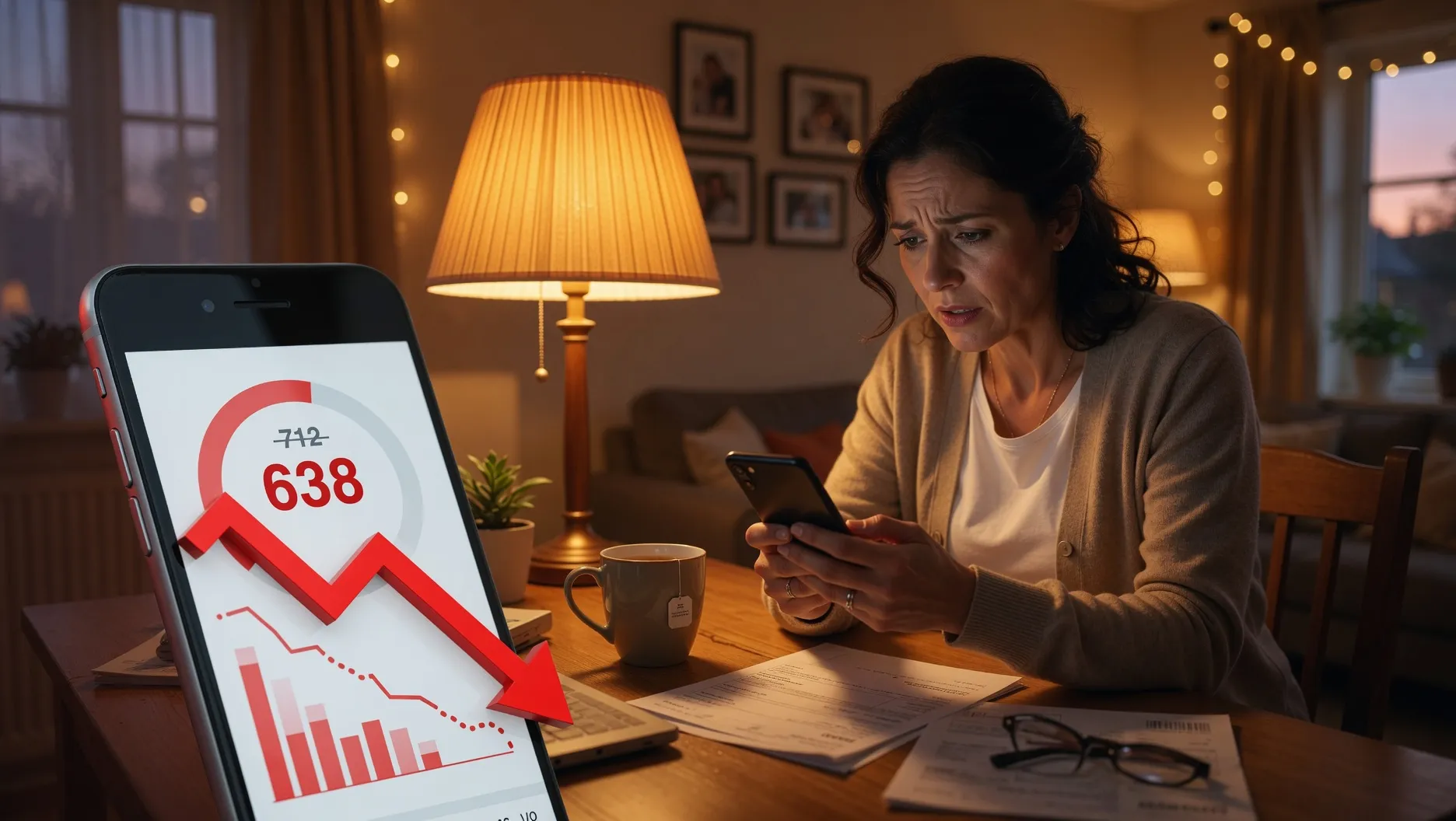
The things that hurt your credit score most, in order: (1) late and missed payments — one 30-day-late payment can cost 60–100 points; (2) high credit utilization — using too much of your available credit (30% of your score); (3) defaults and collections — accounts 90+ days late; (4) bankruptcy — stays 7–10 years; (5) too many hard inquiries in a short time. Most negative marks stay on your report for 7 years, but their impact fades over time. Checking your own score never hurts it.
The 5 Factors That Make Up Your Credit Score
Before the list of what hurts your score, it helps to understand what your score is actually built from. FICO — used in about 90% of lending decisions — weights five factors. Knowing the weights tells you where the biggest damage comes from.
What makes up your FICO score
Payment history and utilization together make up 65% of your score — which is why the most damaging mistakes nearly all relate to those two categories. VantageScore weights things slightly differently (payment history is 40–41%), but the priorities are the same.
What Hurts Your Credit Score — Ranked by Damage
Payment history is 35% of your FICO score — the single biggest factor. Even one payment made 30 days late can drop a high score by 60–100 points, and the higher your starting score, the bigger the fall. The damage grows the later you pay: 60 days late hurts more than 30, and 90 days more still.
The key detail: a payment must be at least 30 days past due to be reported. If you pay within 29 days of the due date, it typically won't hit your credit report — though you may still owe a late fee. Set up autopay for at least the minimum on every account as a safety net; this single action eliminates the most common cause of credit damage.
Credit utilization — how much of your available credit you're using — is 30% of your score. Using more than 30% of your limit starts to hurt; the highest scores belong to people who stay below 10%. FICO looks at utilization both per-card and across all your cards combined, so one maxed-out card hurts even if your overall usage is low.
The good news: utilization has no memory. Unlike late payments, the moment you pay a balance down and the lender reports the lower number, the damage disappears. This makes it the fastest factor to fix — see how to improve your credit score fast.
When an account goes 90+ days without payment, it may be declared in default and sent to a collections agency. This is a major negative mark that signals serious risk to lenders. A collection account can drop your score significantly and stays on your report for 7 years.
If you have an account heading toward collections, paying it off before it's formally sent to a collection agency has a positive effect compared to letting it go to collections. Paid medical collections and unpaid medical debt under $500 are excluded from credit reports under the bureaus' 2023 policy — if any still appear despite qualifying, dispute them.
Bankruptcy is one of the most severe negative marks. Chapter 7 stays on your credit report for 10 years; Chapter 13 for 7 years. It can drop your score by 100+ points and makes new credit difficult to obtain for years. That said, for people who genuinely can't repay their debt, it can be the right reset — but it should be a last resort. See how to get out of debt without bankruptcy for the alternatives to try first.
Each time you apply for credit, the lender pulls your report — a "hard inquiry" — which usually costs fewer than 5 points and recovers within a few months. The problem is volume: many applications in a short window signal risk and have a compounding effect. Statistically, people actively seeking lots of new credit are more likely to miss future payments, so the scoring model treats it as a warning sign.
Exception: rate shopping for a single installment loan (mortgage, auto, student) within a focused window of 14–45 days counts as one inquiry. This protection does not apply to credit card applications — space those out.
Closing a credit card hurts in two ways: it removes that card's limit from your available credit (raising utilization), and if it's an old account, it can lower your average account age. The impact is largest when you close a high-limit card or your oldest card. Unless a card charges an annual fee you can't justify, keep it open — put a small recurring charge on it to keep it active. See how to check your credit score free to monitor the effect of any change.
You can do everything right and still have your score damaged by a mistake that isn't yours. The FTC found 1 in 5 Americans has a verified error on at least one credit report — a payment marked late that you made on time, an account that isn't yours, or a balance that's wrong. These errors can cost significant points. Pull your free reports at AnnualCreditReport.com and dispute anything inaccurate; resolved disputes raise scores by an average of 25 points, sometimes 100+.
If someone opens accounts in your name or runs up fraudulent charges, your score can drop from activity you never authorized. A routine score check won't reveal fraud — you have to look at the full report. Review your reports regularly, set up account alerts, and consider a free credit freeze if you're not actively applying for credit. If you find fraud, dispute it immediately and file a report at IdentityTheft.gov.
Having balances on a large number of accounts — even small balances — can weigh on your score. Scoring models look at how many of your accounts carry a balance, not just your total debt. Paying off and keeping a balance on fewer accounts generally looks healthier than spreading small balances across many cards.
Beyond the hard inquiries, opening several new accounts in a short period lowers your average account age and signals risk. New accounts can indicate increased credit risk to the scoring model. If you need more available credit, requesting a limit increase on an existing card is gentler on your score than opening a new account. Space out new accounts and open them only when you have a clear reason.

How Long Each Negative Mark Stays on Your Report
| Negative item | Time on report | Reversible? |
|---|---|---|
| Late / missed payment | 7 years | Impact fades over time |
| High utilization | No memory | Yes — instantly when paid down |
| Collections / charge-off | 7 years | Impact fades over time |
| Chapter 7 bankruptcy | 10 years | Impact fades over time |
| Chapter 13 bankruptcy | 7 years | Impact fades over time |
| Hard inquiry | 2 years | Affects score ~1 year only |
| Report errors | Until disputed | Yes — file a dispute |
What Does NOT Hurt Your Credit Score
Plenty of common worries have zero effect on your score. Clearing these up saves a lot of unnecessary anxiety:
- Checking your own score. A soft inquiry — check it daily if you want, it never hurts.
- Your income or salary. Not part of your credit score at all.
- Your bank account balance or savings. Deposit accounts aren't reported to credit bureaus.
- Debit card use. Debit cards don't involve credit and aren't reported.
- Getting denied for credit. The application's hard inquiry counts, but the denial itself doesn't add extra damage.
- Using a credit monitoring app. These use soft inquiries and never affect your score.
The big-picture takeaway: The two things that protect your score the most are paying every bill on time and keeping your credit utilization low. Get those two right — automate payments, keep balances under 10–30% — and you've handled 65% of your score. Everything else on this list matters far less by comparison. If you've already made a mistake, time heals: the impact of negative marks fades, and high utilization can be erased entirely by paying down the balance.
Frequently Asked Questions
What hurts your credit score the most?
Late and missed payments hurt the most. Payment history is 35% of your FICO score, and even one payment 30 days late can drop a high score by 60–100 points. Next most damaging: high credit utilization (30% of your score), defaults and collections (90+ days late), and bankruptcy. These severe items also stay longest — most negative marks remain 7 years, Chapter 7 bankruptcy 10 years.
Does checking your own credit score hurt it?
No. Checking your own score is a soft inquiry with zero impact. You can check daily, weekly, or monthly without penalty. Only hard inquiries — when a lender pulls your credit because you applied for a loan or card — lower your score, and only by about 5 points each. Bank apps and Credit Karma never hurt your score.
How much does one late payment affect your credit score?
A single 30-day-late payment can drop a high score by 60–100 points — the higher your starting score, the bigger the drop. The payment must be 30+ days past due to be reported; paying within 29 days typically avoids a report. Once reported, it stays 7 years, but the impact fades significantly after about 2 years if you keep everything else current.
Does closing a credit card hurt your credit score?
Usually yes. Closing a card reduces your available credit (raising utilization, 30% of your score) and can lower your average account age (15% of your score). The impact is largest for high-limit cards or your oldest account. The main exception is a card with a high annual fee you can't justify. If you do close one, keep your oldest accounts open.
How long do negative items stay on your credit report?
Most stay 7 years from the first missed payment — late payments, charge-offs, collections, Chapter 13 bankruptcy. Chapter 7 stays 10 years. Hard inquiries stay 2 years but affect your score only about 1 year. The impact of most marks fades over time. High utilization is the exception — it has no memory and disappears from your score as soon as you pay the balance down.
Sources & References
- Experian — What Affects Your Credit Scores (late payments, utilization 30%, defaults, inquiries)
- NerdWallet — What Factors Affect Your Credit Scores (March 2026): payment history 35%, utilization 30%
- FICO — FAQs About FICO Scores: factor weights, inquiries, new accounts
- myFICO — Not-so-obvious causes for a dropping FICO score
- ConsumerAffairs — What Affects Your Credit Score (April 2026): FICO vs VantageScore weighting
- Federal Trade Commission — credit report error study (1 in 5 Americans has a verified error); IdentityTheft.gov