
To build credit with no credit history: open a secured credit card (fastest path — generates a score in 3–6 months), use Experian Boost to add rent and utility payments (can add points in minutes), and consider a credit-builder loan from a credit union. Use your secured card for one small purchase per month, pay the full balance before the statement closes, and never miss a payment. Most people generate a score above 600 within 90–180 days using this combination.
How to Build Credit with No Credit History — Understanding the Starting Point
Here's the frustrating paradox of credit: you need credit history to get credit. Every lender wants to see a track record before approving you — but you can't build a track record without someone giving you a chance first.
The Consumer Financial Protection Bureau (CFPB) estimates approximately 45 million Americans are credit invisible — they have no credit score at all because they have no accounts reported to the credit bureaus. Another 7.5 million have credit reports but not enough recent activity to generate a score. Together, that's roughly 52 million Americans effectively locked out of mainstream credit.
The good news: in 2026, there are more paths into the credit system than ever before. Two significant scoring changes — the rollout of FICO 10T for mortgages and the integration of Buy Now Pay Later data — have expanded the pool of behaviors that count toward your credit score. And tools like Experian Boost have made it possible to generate a score quickly using payment history you already have.
Method 1 — Secured Credit Card: The Fastest Foundation
Open a secured credit card and use it strategically
A secured credit card requires a refundable deposit — typically $200–$500 — that becomes your credit limit. The card works exactly like a regular credit card, and the issuer reports your payment history to all three credit bureaus (Experian, Equifax, TransUnion) just like any other card.
This is the single most reliable way to build credit from nothing. Here's why: payment history is 35% of your FICO score — the largest single factor. Every month you make a payment on time, you're adding positive data to your credit file. After 6 months of reported activity, you have enough history to generate a FICO score.
How to use a secured card correctly:
- Make one small purchase per month — a streaming subscription, a grocery trip, a tank of gas
- Pay the full balance before your statement closes — not the due date, but before the statement is generated. This keeps your reported utilization at 0%, which is ideal.
- Set up autopay for the full balance as a safety net
- Never use more than 10% of your credit limit
What to look for in a secured card: No annual fee or a low one, reports to all three bureaus, and a clear path to graduating to an unsecured card. The Discover it Secured Card and Capital One Platinum Secured are well-regarded options that often upgrade cardholders to unsecured cards after 6–8 months of responsible use and return your deposit.
OpenSky exception: If you have no bank account or have had banking issues, the OpenSky Secured Visa requires no credit check and no checking account — just a prepaid card or money order for the deposit. It's the most accessible entry point for people with truly no financial history.
Method 2 — Experian Boost: Add Points You've Already Earned
Use Experian Boost to add rent, utilities, and streaming payments
Experian Boost is a free service that lets you add on-time utility payments, phone bills, rent, and streaming subscriptions (Netflix, Spotify, Disney+) to your Experian credit file. If you've been paying these bills reliably, that payment history is already there — Experian Boost just makes it visible to lenders.
The impact can be immediate. Unlike traditional credit-building methods that take months, Boost updates your Experian score within minutes of linking your accounts. For someone with a thin credit file, this can be the difference between having no score and having one.
Who benefits most: People with zero or very thin credit history see the largest gains. Someone with no credit file who pays their phone bill on time every month could potentially generate a positive score almost immediately through Boost alone — though for full credit building, you still need a traditional credit account reporting to all three bureaus, not just Experian.
Important limitation: Experian Boost only affects your Experian score, not Equifax or TransUnion. Many lenders pull all three. Still, for establishing any kind of score quickly, it's the fastest tool available.
Method 3 — Become an Authorized User on Someone's Account
Get added to a trusted person's credit card as an authorized user
When someone with good credit adds you as an authorized user on their credit card, that account's history — including its age, payment record, and credit limit — appears on your credit report. You inherit the benefit of their track record without being responsible for their debt.
You don't even need to use the card. You don't need to receive the physical card. As long as the issuer reports authorized users to the credit bureaus (most major issuers do), the account shows up on your report within 30–60 days.
What to look for in an authorized user account:
- Account age of 3+ years — older is better for your length of credit history
- Perfect or near-perfect payment history — any late payments transfer to your report too
- Low credit utilization — below 30%, ideally below 10%
- High credit limit — increases your total available credit and lowers your utilization ratio
Protect the relationship: Being added as an authorized user creates no legal obligation — you can't be held responsible for the primary cardholder's debt. But if you use the card and don't reimburse them, it can damage both the relationship and their credit if balances rise. Discuss expectations clearly before agreeing.
Method 4 — Credit-Builder Loan: Build Savings and Credit Simultaneously
Open a credit-builder loan at a credit union or through Self
A credit-builder loan works in reverse of a regular loan. Instead of receiving money and paying it back, you make monthly payments into a savings account — and receive the money at the end of the term. Every payment is reported to the credit bureaus as an on-time installment loan payment.
The CFPB studied credit-builder loans and found that people without an existing loan who opened one increased their likelihood of having a credit score by 24%. Those same participants saw their credit scores increase by 60 points more than participants who already had existing debt.
Where to find one: Credit unions are the best source — they typically offer low fees and good terms. Self (formerly Self Lender) is the most accessible online option, with monthly payments from $25 to $150 and terms of 12 or 24 months. Credit unions like Navy Federal and local community credit unions often have comparable products.
Why it works particularly well alongside a secured card: The credit-builder loan adds an installment account to your credit file. Having both revolving credit (the secured card) and installment credit (the loan) demonstrates credit mix — which accounts for 10% of your FICO score. This combination of account types accelerates score building compared to a single account type.
Method 5 — Student Credit Card (for College Students)
Apply for a student credit card if you are currently enrolled
If you're a college student, student credit cards are designed specifically for thin credit files. Issuers like Discover, Capital One, and Bank of America offer student versions of their cards with lower credit requirements, lower credit limits, and often rewards programs that build credit while you learn to use it responsibly.
The Discover it Student Cash Back card is consistently rated as one of the best entry-level cards for students — it reports to all three bureaus, has no annual fee, offers cash back rewards, and Discover reviews accounts for a possible credit limit increase after the first year.
The key rules are identical to secured cards: use it for small regular purchases, pay the full balance before the statement closes, and set up autopay as a backup. The advantage over a secured card is that you don't need a deposit, freeing up that cash for other financial goals.
Method 6 — Rent Reporting Services
Report your rent payments to the credit bureaus
If you pay rent on time every month, you're already building a strong financial track record that the credit bureaus have historically ignored. Rent reporting services change that by reporting your monthly rent payments to one or more credit bureaus.
In 2026, VantageScore 4.0 — increasingly adopted by lenders including Fannie Mae and Freddie Mac for mortgages following a Federal Housing Finance Agency directive — actively incorporates rent payment data when available. This is a significant change that makes rent reporting more valuable than ever.
Services to consider: Bilt Mastercard reports rent payments with no fee (you pay rent with the card and earn rewards). RentReporters ($9.95/month) and Boom ($3/month) report to TransUnion. Experian RentBureau reports through property management systems. The right choice depends on how you pay rent and which bureaus your potential lenders check.
What to Expect: A Realistic Credit Score Timeline
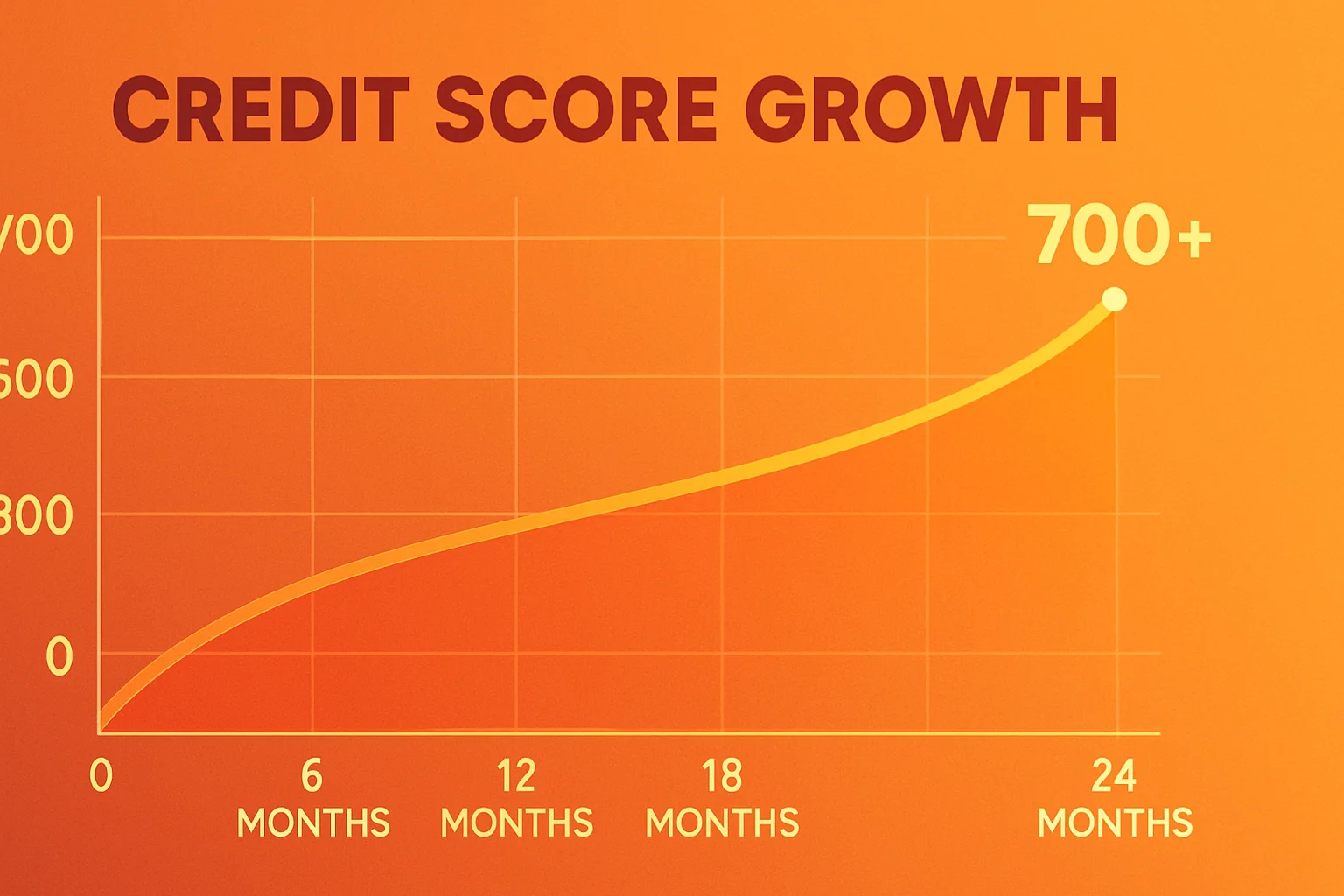
Building credit from scratch requires patience. Here's what to realistically expect at each milestone:
These ranges assume consistent on-time payments, low utilization (under 10%), and no negative marks. Results vary significantly based on individual circumstances. Authorised user accounts from older accounts can significantly accelerate this timeline.
2026 Credit Scoring Changes That Make This Easier
Important 2026 updates to credit scoring
FICO 10T for mortgages: Following a Federal Housing Finance Agency directive, mortgage lenders are now required to use FICO 10T alongside older models when evaluating mortgage applications. FICO 10T looks at 24 months of credit behavior trends — not just your current snapshot — and incorporates trended data. For people building credit, this means consistent improvement over time is increasingly recognized and rewarded.
FICO Score 10 BNPL: FICO launched new scoring models in June 2025 that incorporate Buy Now Pay Later (BNPL) data from platforms like Affirm and Klarna. Responsible BNPL users who pay on time can now generate positive credit history from purchases that previously went unrecorded. Missed BNPL payments now count against you — so pay those on time too.
Medical debt under $500: Medical collections under $500 no longer impact your credit score. If you had a small medical collection dragging down your score, it may have already been removed automatically.
VantageScore 4.0 adoption: Increasingly used by auto lenders and now mortgage lenders, VantageScore 4.0 incorporates rent, utility, and telecom payment data when available — giving thin-file consumers more ways to demonstrate creditworthiness.
The Mistakes That Slow Down Credit Building
What you avoid matters as much as what you do:
- Missing a single payment. Payment history is 35% of your score. One 30-day late payment can drop a new credit score by 60–110 points and stays on your report for 7 years. Autopay exists for exactly this reason — use it.
- High utilization. Carrying a balance close to your credit limit signals financial stress to scoring models. Keep reported balances below 10% of your limit — ideally zero — by paying before statement close.
- Applying for too many cards at once. Every application triggers a hard inquiry worth 5–10 points. Applying for 3–4 cards in your first 90 days signals desperation to lenders and temporarily damages the score you're trying to build.
- Closing your first credit card. Your oldest account contributes to length of credit history (15% of your score). Even after you graduate to better cards, keep your first card open with a small recurring charge.
- Ignoring your credit report. Check all three bureaus at AnnualCreditReport.com at least once a year. Errors are common — one in five Americans has a verified error — and disputing them is free.
Frequently Asked Questions
How long does it take to build credit from nothing?
You can generate your first credit score within 3–6 months of opening your first credit account. A score of 670+ (considered "good" by FICO) typically takes 12–24 months of consistent on-time payments and low utilization. An excellent score of 750+ generally requires 2+ years. The fastest path: open a secured credit card and use Experian Boost simultaneously — some people generate a score above 600 within 90 days.
What is the easiest credit card to get with no credit history?
Secured credit cards are the easiest to get because your deposit secures the credit line. The OpenSky Secured Visa requires no credit check at all. The Discover it Secured Card and Capital One Platinum Secured are popular options that may graduate to unsecured cards after 6–8 months. Student credit cards are also relatively easy to obtain if you're currently enrolled in college.
Can I build credit with a debit card?
No. Standard debit cards do not build credit — no credit bureau sees debit card transactions. Some fintech products report spending behavior, but a secured credit card paid in full each month is the simplest and most established path. The key is having an account that reports to all three major credit bureaus.
What credit score do you start with?
You don't start with any credit score — you're credit invisible until you have at least one account open for six months with recent bureau reporting. Your first score once generated is typically in the 580–620 range, not the minimum of 300. Most people with thin files who open their first account responsibly generate a score in the 600s within 6 months.
Does checking my own credit score hurt it?
No. Checking your own credit is a soft inquiry with zero impact. You can check it as often as you want for free through Experian, Credit Karma, or your bank's credit tool. Only hard inquiries — when a lender evaluates a loan or card application — can temporarily lower your score by 5–10 points. Monitor your score regularly, especially when building from scratch.
Sources & References
- Consumer Financial Protection Bureau — Data Point: Credit Invisibles (45 million Americans)
- CFPB — Credit Builder Loans Research: +24% likelihood of score, +60 points average
- FICO — FICO Score 10 Suite including BNPL integration, June 2025
- Federal Housing Finance Agency — VantageScore 4.0 and FICO 10T adoption for mortgages, 2026
- Experian — Experian Boost — Add utility and rent payments
- Bankrate — Best Credit Cards for No Credit History, May 2026
- NFCC — National Foundation for Credit Counseling — credit-builder resources