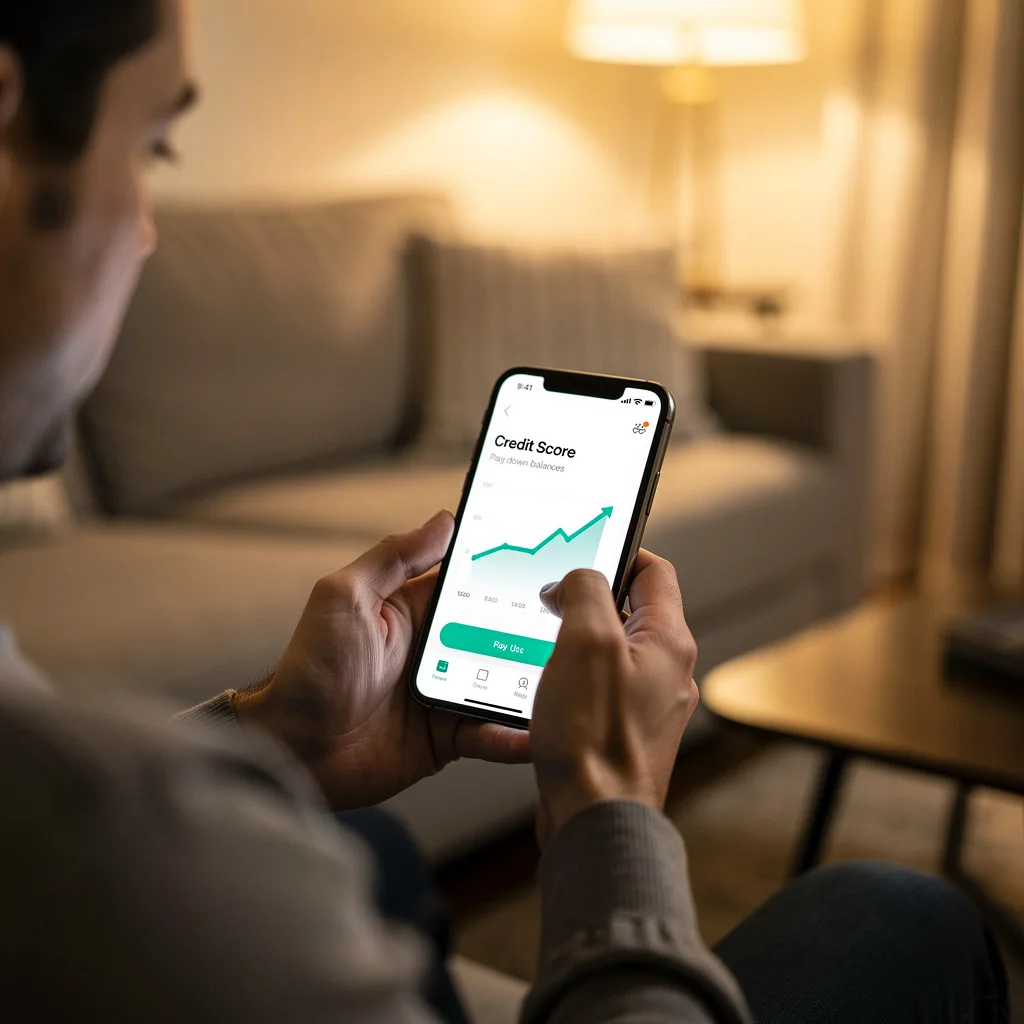
The fastest way to improve your credit score is to reduce credit card utilization below 7% by paying down balances before your statement closing date — this can add 20–50 points in a single billing cycle. After that: dispute errors on your credit report (1 in 5 Americans has a verified error, average improvement 25 points), request credit limit increases without spending more, and check for medical collections that qualify for removal under the bureaus' 2023 policy (paid, or unpaid under $500). The average American's utilization jumped to 36.1% in 2026 — well above the scoring penalty threshold.
How to Improve Your Credit Score Fast — Where Americans Stand in 2026
The average FICO score dipped from 717 to 715 in late 2025 — the first decline in over a decade. The drop was driven by two specific factors: the resumption of student loan delinquency reporting after pandemic-era pauses ended, and rising credit card utilization. According to Experian's 2026 State of Credit report, the average American's utilization jumped to 36.1% — well above the scoring penalty threshold and into territory where FICO models apply meaningful score reductions.
The strategies below are ordered by point impact — how many points you can realistically gain and how quickly. This isn't the standard list reordered arbitrarily. It reflects FICO's published scoring research, Federal Reserve consumer credit data, and CFPB dispute outcome studies.
Strategy 1 — Reduce Credit Utilization Below 7% Immediately
Credit utilization — the percentage of your available revolving credit you're using — accounts for approximately 30% of your FICO score. The standard "stay below 30%" advice is a damage threshold, not an optimization target. FICO's own data shows that people with the highest scores typically maintain utilization below 10%. The sweet spot for maximum scoring benefit is below 7%.
The timing detail that most people miss: your card issuer reports your balance to the credit bureaus at your statement closing date — not your payment due date. These are different dates. If you pay your balance in full on the due date but have a high balance at statement close, the bureaus see that high balance and score you accordingly.
Pay down to $700 before statement close → 7% utilization → no penalty
Potential improvement: 20–50 points in one billing cycle — zero new accounts required
Utilization also has no memory. Unlike late payments that stay on your report for 7 years, a high utilization month is completely erased once you pay it down. This makes it the most forgiving and fastest-acting factor in your score.
If you can't pay down the balance: call your card issuer and request a credit limit increase. Even without paying down the balance, a higher limit reduces your utilization ratio immediately. A card with a $2,000 balance and a $4,000 limit is at 50% utilization. Increase the limit to $8,000 and utilization drops to 25% — same balance, different score impact.
FICO evaluates utilization at both the individual card level and the aggregate level. One card at 75% utilization hurts your score even if your total utilization across all cards is low. Prioritize paying down your highest-utilization card first.
Strategy 2 — Dispute Errors on Your Credit Report
The Federal Trade Commission's landmark study found that 1 in 5 Americans — 20% — has a verified error on at least one credit report. CFPB research shows that successfully resolved disputes produce an average score increase of 25 points, with some cases exceeding 100 points when erroneous collections or late payments are removed.
In 2026, FCRA amendments have strengthened dispute timelines and require better documentation from bureaus — making disputes more effective than ever. The entire process is free.
How to dispute effectively:
- Pull all three reports at AnnualCreditReport.com — free weekly access was permanently extended after the pandemic
- Look for: accounts you don't recognize, late payments you made on time, balances that are wrong, accounts listed as open that are closed, duplicate accounts
- File disputes with each bureau separately — an error at Experian won't automatically be fixed at Equifax
- Dispute online (fastest), by mail (most documentation), or by phone
- Bureaus have 30 days to investigate and respond
2025-2026 medical debt update: The CFPB finalized a rule in January 2025 that would have removed most medical debt from credit reports nationwide, but a federal court struck it down in July 2025, ruling the CFPB exceeded its authority — it is not in effect as of 2026. What does still apply is the three major bureaus' own 2023 policy: paid medical collections are no longer reported, and unpaid medical debt under $500 isn't reported either. If medical collections that qualify under those rules still appear on your report, file a dispute — see our full guide on medical debt and credit reports for the complete, current picture.
Strategy 3 — Never Miss a Payment — Set Up Autopay Now
Payment history is the single largest factor in your FICO score at 35%. Every on-time payment strengthens your record. One 30-day late payment can drop a 780 score by 60–100 points and stays on your report for seven years. The scoring impact of a late payment fades over time — significantly after 2 years, substantially after 4 — but it never disappears before the 7-year mark.
The fix is structural, not behavioral: set up autopay for at least the minimum payment on every account. This is a one-time action that eliminates the primary cause of score damage for most Americans. You can still pay more manually — autopay is the safety net, not the strategy.
What happens when you miss a payment: Issuers don't report to bureaus the moment you miss a due date. Most report at 30 days past due. If you realize you missed a payment, paying immediately — even a day late — typically avoids the bureau report. Contact your issuer and ask for a goodwill adjustment if a late payment was already reported and it was your first.
The national share of consumers with a 90-plus-day delinquency jumped from 7.4% to 8.3% by February 2025 — surpassing pre-pandemic levels for the first time since 2020. Gen Z saw the largest average score decrease of any age group, falling 3 points year-over-year, driven largely by student loan payment resumptions hitting credit reports.

Strategy 4 — Become an Authorized User on a Strong Account
When someone with excellent credit adds you as an authorized user on their credit card, that account's history — its age, payment record, credit limit, and utilization — appears on your credit report. You inherit the benefit of their track record.
You don't need to receive or use the physical card. You don't need to make any purchases. As long as the issuer reports authorized users to the credit bureaus (most major issuers do), the account appears on your report within 30–60 days.
What makes an authorized user account valuable: Account age of 3+ years, perfect or near-perfect payment history, low credit utilization (below 10%), and a high credit limit. Any late payments or high balances on the account will transfer to your report too — confirm the account's history before agreeing.
Strategy 5 — Use Experian Boost to Add Non-Credit Payment History
Experian Boost is a free service that lets you add on-time utility, phone, rent, and streaming subscription payments to your Experian credit file. If you've been paying these bills on time, that history exists — Experian Boost just makes it count toward your score.
The impact is immediate — Experian updates your score within minutes of linking your accounts. The limitation: Boost only affects your Experian score, not Equifax or TransUnion. Many lenders pull all three bureaus, so this isn't a complete solution. But for establishing any positive history quickly, it's the fastest tool available.
Strategy 6 — Keep Old Accounts Open and Avoid New Hard Inquiries
On closing old cards: Length of credit history accounts for 15% of your FICO score. Your oldest account's age, average account age, and age of newest account all factor in. Closing an old credit card — even one you never use — permanently reduces your average account age and potentially removes a high credit limit from your utilization calculation. Unless the card carries a high annual fee you can't justify, keep old accounts open with a small recurring charge to keep them active.
On new credit inquiries: Every application for a new credit card or loan triggers a hard inquiry — worth 5–10 points — and stays on your report for two years. Applying for multiple new accounts in a short period signals financial desperation to scoring models. Rate shopping for mortgages and auto loans within a 14–45 day window counts as a single inquiry under FICO models, but credit card applications do not get this treatment.
When a new account helps: Adding a new credit card increases your total available credit, which can reduce your overall utilization ratio. If you have high utilization and can qualify for a new card, the utilization improvement may outweigh the temporary inquiry hit. Calculate the net effect before applying.
2026 Credit Scoring Changes That Create New Opportunities
BNPL data now in scoring models: FICO launched new scoring models in June 2025 that incorporate Buy Now Pay Later (BNPL) data from Affirm and Klarna. Responsible BNPL users who pay on time can now generate positive credit history from purchases that previously went unrecorded. Missed BNPL payments now carry real consequences. Treat BNPL installments exactly like credit card payments — set up autopay, never miss a due date.
FICO 10T for mortgages: The Federal Housing Finance Agency now requires mortgage lenders to use FICO 10T alongside older models. FICO 10T looks at 24 months of credit behavior trends — showing consistent improvement over time is increasingly recognized and rewarded. A saw-tooth pattern of paying off then running up balances hurts more under FICO 10T than a steady downward trajectory.
Medical debt on your report: A federal rule that would have removed most medical debt from credit reports nationwide was struck down in court in 2025. The bureaus' 2023 policy still stands, though: paid medical collections aren't reported, and unpaid medical debt under $500 isn't either. If medical collections that qualify still appear on your report, file a dispute.
Realistic Score Improvement Timeline
Frequently Asked Questions
How quickly can you improve your credit score?
Reducing credit card utilization can show results within one billing cycle (30 days). Disputing errors typically takes 30–45 days for bureaus to investigate. Becoming an authorized user can add history within 30–60 days. Most people can see 20–50 point improvement within 60–90 days by focusing on utilization and error disputes. Payment history improvements take longer — missed payments stay on reports for 7 years, though their impact fades significantly after 2–3 years.
What is the fastest way to improve your credit score?
The single fastest action is reducing credit card utilization below 10% by paying down balances before your statement closing date — not the due date. Utilization has no memory, so improvement reflects in the next reported balance. Paying a $3,000 balance down to $300 on a $10,000 limit card can improve your score by 30–50 points within one billing cycle.
Does paying off a collection improve your credit score?
It depends on the scoring model. Under older FICO 8 models, paying off a collection doesn't remove it from your report. Under newer models (FICO 9, VantageScore 4.0), paid collections have less impact. Paid medical collections are no longer reported under the bureaus' 2023 policy, and unpaid medical debt under $500 isn't reported either — a separate federal rule that would have removed medical debt more broadly was struck down in court in 2025. For non-medical collections, negotiate a "pay for delete" agreement in writing before paying — getting the collection removed entirely in exchange for payment.
How much does credit utilization affect your score?
Utilization accounts for approximately 30% of your FICO score — the second-largest factor. The "stay below 30%" rule is a damage threshold, not an optimization target. People with the highest scores typically stay below 10%. The average American's utilization jumped to 36.1% in 2026 per Experian data — well into penalty territory. FICO evaluates utilization at both individual card and aggregate level.
Will closing a credit card hurt my credit score?
Usually yes. Closing a card reduces total available credit (raising utilization) and can reduce average account age. The impact is largest if the card has a high limit or is your oldest account. The exception: if you're paying a high annual fee on a card you never use. If you do close a card, keep your oldest accounts open regardless.
Sources & References
- Experian — State of Credit 2026 (average utilization 36.1%; average FICO 715)
- FICO — Credit Insights Report 2026 (FICO score declined to 715; delinquency rates rising)
- CFPB — Dispute analysis: average 25-point improvement on resolved credit report errors
- Federal Trade Commission — Credit report errors study: 1 in 5 Americans has verified error
- ScoreNerds — How to Improve Credit Score Fast 2026 — strategies ranked by measured effectiveness
- FICO — FICO Score 10 BNPL launch June 2025 — Buy Now Pay Later data incorporated
- Federal Housing Finance Agency — FICO 10T mortgage underwriting requirement, 2026
- iTHINK Financial — How to Build Credit Fast in 2026 — BNPL scoring impact analysis