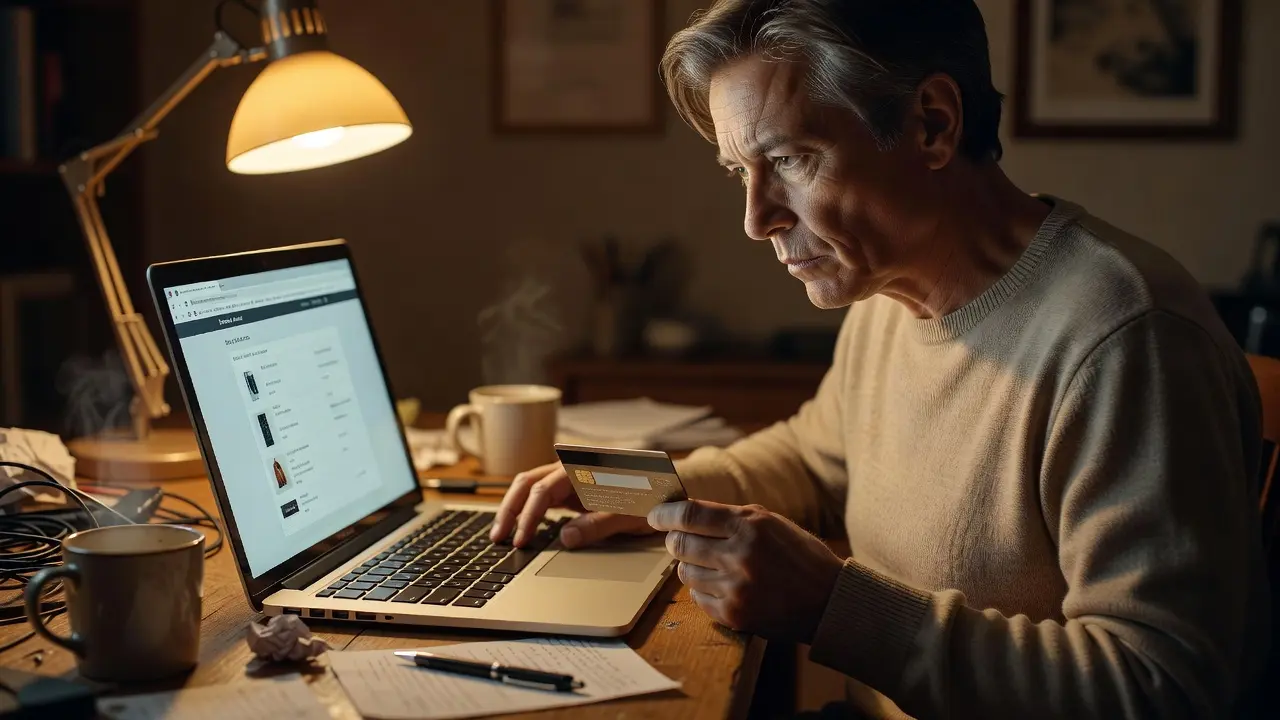
Overspending is psychology, not weak willpower. Buying triggers dopamine, cards dull the "pain of paying," and stress or boredom drives impulse buys. So stop relying on self-control and redesign your environment: use the 24-hour rule, remove saved cards and turn off one-click, name the emotion before buying, use cash or debit for problem areas, add friction, budget guilt-free "fun money", automate savings first, and try a no-spend day. The goal isn't to cut all joy — it's to make spending match your priorities.
First, Stop Blaming Your Willpower
The single most important shift is to stop treating overspending as a character flaw. It isn't. It's the predictable result of a brain wired for a world that no longer exists, colliding with an economy engineered to exploit exactly that wiring.
Here's what's actually happening in your brain when you overspend:
Dopamine
Buying something releases the "feel-good" chemical. The rush is real but temporary, creating a craving to buy again to chase the high.
The dulled "pain of paying"
Cash hurts to spend. Cards, mobile wallets, and saved details numb that pain — Carnegie Mellon found cards literally "anesthetize" it.
Emotional triggers
Stress, boredom, sadness, and loneliness drive impulse buys as a coping mechanism — "retail therapy" is a real reflex.
Engineered marketing
Anchoring ("was $200, now $99"), fake scarcity ("only 2 left"), countdown timers, and one-click checkout bypass your rational brain.
Notice the theme: almost none of this is about how much you "want it." It's about systems designed to make you spend without thinking. So the fixes below don't ask you to want things less — they add the friction and awareness that put the decision back in your hands.
9 Psychology-Backed Ways to Stop Overspending
Use the 24-hour rule
For any non-essential purchase over a threshold you set (say, $50), wait 24 hours before buying. Put it in the cart and sleep on it. Impulse comes from your brain's emotional center; a short delay lets your rational prefrontal cortex catch up. A University of Michigan study found brief delays reduce impulsive overspending — and since most urges fade within 24–48 hours, if you still want it tomorrow, it's probably not an impulse. For big purchases, extend it to 30 days.
Delete your saved payment details
Remove your saved cards from shopping sites and browsers, and turn off one-click buying. When you have to physically get up and fetch your card to enter the numbers, that tiny friction breaks the spell of the impulse. The whole reason one-click exists is to remove the pause where you might reconsider — so put the pause back.
Pause 60 seconds and name the emotion
When the urge hits, stop for one minute and identify the actual feeling underneath it. Not "I want this" — are you stressed, bored, lonely, resentful? Naming the emotion activates your rational brain and counters the impulse, creating a gap between trigger and purchase. That gap is everything. Then replace the impulse with a free alternative: a walk, a text to a friend, a glass of water.
Use cash or debit for problem areas
You don't have to go all-cash, but for your specific weak spots — dining out, online shopping, whatever yours is — switch to cash or debit. It reintroduces the "pain of paying" that cards numb, so each purchase registers as a real decision. The envelope method is the structured version: set cash per category, and when it's gone, you're done.
Add friction everywhere it helps
Online shopping nearly eliminates friction, which is exactly why it drives overspending. Add it back: turn off one-click, set card limits in your banking app, disable auto-renewals for nonessential subscriptions, unsubscribe from store marketing emails, and delete shopping apps so you can only buy on desktop. Each small inconvenience is a moment for your brain to ask, "do I actually want this?"
Budget guilt-free "fun money"
Total restriction backfires — like a crash diet, deprivation builds until you break. Deliberately give yourself a "fun money" category ($50–$200/month, or whatever fits after essentials and savings) to spend on wants with zero guilt. This satisfies the urge to spend while keeping it bounded. Stopping overspending was never about eliminating joy; it's about making spending intentional.
Automate savings before you can spend
Your brain has a "present bias" — a purchase feels like a gain now, while saving feels like a loss. You can't beat that with monthly willpower, so remove the decision: set up automatic transfers to savings and debt the day you're paid. The money is gone before you can spend it, which makes saving the default and spending the exception. Pay your future self first.
Try a weekly no-spend day
Pick one day a week where you spend nothing on non-essentials — no dining out, no online shopping, no impulse buys. The real benefit isn't the money saved that day; it's the awareness it builds. Most people who try it for a month are stunned by how many purchases they almost made out of pure habit rather than genuine desire. It retrains the reflex.
Keep a spending-and-feeling journal
For a few weeks, write down what you spend and how you felt at the time. Seeing it on paper reveals hidden patterns — you might notice purchases cluster when you're anxious, bored, or celebrating. Once you can predict your triggers (late at night, after a stressful day, payday), you can prepare for them instead of being ambushed. Awareness is where lasting change starts.
Three Questions to Ask Before You Buy
When you're on the fence, a quick mental checklist (popularized in part by Chase's budgeting guidance) reframes the decision around value instead of impulse:
- What's the purpose of this purchase? Is it a real need or a fleeting want?
- How does it fit my budget? Does it have a home in my plan, or am I borrowing from something else?
- Will it move me toward my goals? Or away from them?
Another reframe that helps: convert the price into what it really costs you. That $40 impulse buy isn't just $40 — it's $40 that could have gone toward your emergency fund or a goal you actually care about. Suddenly the trade feels different.
When overspending is more than a habit: Occasional impulse buys are completely normal. But if spending feels compulsive, is creating debt, or is your main way of coping with difficult emotions, it may point to something deeper. There's no shame in that — financial therapists help uncover why spending patterns exist, and financial coaches help build new habits. Reaching out is a strength, not a failure.
The bottom line: Overspending is rarely about math, and almost never about being "bad with money." It's about environment, emotion, and habit — and the good news is that all three are designable. You don't need more willpower; you need a 24-hour pause, fewer saved cards, a named emotion, some friction, and a guilt-free fun budget so you're not white-knuckling deprivation. Change the environment, and the math fixes itself. Pick the two or three strategies above that hit your specific triggers, start this week, and let the systems do the work willpower never could.
Frequently Asked Questions
Why do I keep overspending even when I have a budget?
Because overspending is psychology, not a math or willpower problem. Buying releases dopamine, creating a craving to buy again. Cards, mobile wallets, and saved details remove the "pain of paying" you'd feel with cash. Stress, boredom, and sadness trigger impulse buys as coping. And marketing tactics — anchoring, fake scarcity, one-click checkout — are engineered to bypass your rational brain. NerdWallet found 84% of budgeters still overspend sometimes. The fix isn't more willpower; it's redesigning your environment and adding friction so money follows your priorities.
What is the 24-hour rule for spending?
For any non-essential purchase (often $50+), wait 24 hours before buying — put it in your cart and decide the next day. It works neurologically: impulse comes from your brain's emotional center, and a short delay lets your rational prefrontal cortex catch up. A University of Michigan study found brief delays reduce impulsive overspending. Most urges fade within 24–48 hours, so if you still want it after waiting, it's probably not an impulse. For bigger buys, extend to a 30-day rule. It costs nothing and filters out purchases you'd regret.
How do I stop emotional spending?
Address the emotion, not just the spending. The best technique is to pause and name the feeling: when the urge hits, stop 60 seconds and identify whether you're stressed, bored, lonely, or resentful. Naming it activates your rational brain and creates a gap between trigger and purchase. Keep a note of your triggers (like late at night or after a hard day), and replace the impulse with a free activity — a walk or calling a friend. Financial journaling reveals hidden patterns. If it's compulsive or causing debt, consider a therapist or financial counselor.
Should I use cash instead of credit cards to stop overspending?
For problem areas, yes — and the science is strong. Behavioral economists call the discomfort of parting with money the "pain of paying." A Carnegie Mellon study found credit cards "anesthetize" that pain, making it easier to overspend, while cash makes the cost feel real. Mobile wallets dull it further. You needn't go all-cash, but using cash or debit for weak spots (dining out, impulse shopping) restores helpful friction. The envelope method is the structured version: set cash per category, and when it's gone, you're done. Make spending tangible again.
Is it bad to budget for fun money?
No — including "fun money" makes you more likely to stop overspending. Complete restriction backfires, like a crash diet leading to a binge. Forbidding all discretionary spending builds deprivation until you break. Instead, create a guilt-free "fun money" category ($50–$200/month, or whatever fits after essentials and savings) to spend on wants freely. This satisfies the urge to spend while keeping it bounded. Stopping overspending was never about eliminating enjoyment — it's about making spending reflect your priorities. A planned amount for fun is a feature of a healthy budget, not a failure.
Sources & References
- Empeople / Carnegie Mellon — 7 Psychology-Backed Ways to Curb Overspending (March 2026): "pain of paying," cards anesthetize it, friction, U-Michigan 24-hour delay
- Due — The Psychology of Spending (March 2026): NerdWallet 84% overspend, dopamine, present bias, anchoring, FOMO, sunk cost
- Higherdot — How to Stop Overspending (Feb 2026): name the emotion in 60 seconds, no-spend day, automate savings, prefrontal cortex
- Finvex — Stop Impulse Spending (Feb 2026): urges fade in 24–48h, fun-money $50–$200/month, remove saved payment methods
- U.S. News — Inside the Psychology of Overspending: emotional triggers, escapism, professional guidance
- Chase — Impulse Buying: three questions to ask before you buy, recognizing triggers