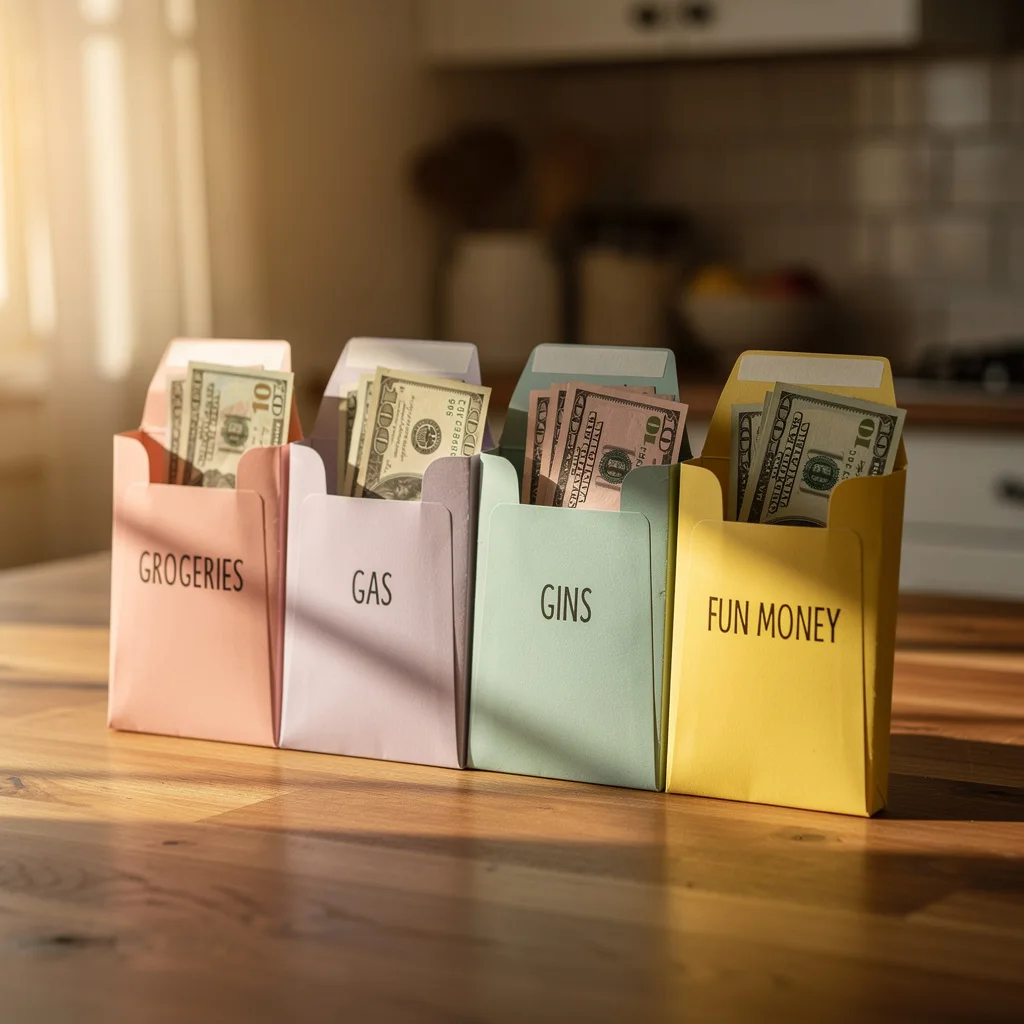
The envelope budgeting method divides your money into spending categories before you spend it. Each category — groceries, gas, dining out — gets a set amount in a labeled envelope. When the envelope is empty, spending in that category stops until it's refilled. The physical-cash version is called "cash stuffing." It works because people spend 12–18% less with cash than cards (the "pain of paying"). Start with 5–7 categories. In 2026, many people use a hybrid: cash for overspending-prone categories, digital envelopes or apps (YNAB, Goodbudget) for the rest.
What the Envelope Budgeting Method Is
The envelope system is a budgeting method where you divide your money into separate spending categories — "envelopes" — before you spend it. Instead of keeping all your spending money in one big checking balance, you split it into categories like groceries, gas, dining out, and fun money, and each category gets its own envelope with a set amount.
The core rule is what makes it powerful: once an envelope is empty, you stop spending in that category until more money is added. That hard stop is what separates envelope budgeting from simple expense tracking. Tracking only shows you where your money went after it's gone. Envelopes prevent the overspending in the first place — you can't spend money that isn't in the envelope.
The method was popularized for modern audiences by personal finance expert Dave Ramsey and has been helping people control overspending for decades. Its recent viral revival on social media under the name "cash stuffing" introduced it to a new generation dealing with the same problem: money disappearing before the next paycheck.
Cash Stuffing vs. Envelope Budgeting — The Difference
These terms get used interchangeably, but there's a small distinction worth understanding:
- Cash stuffing is the physical-cash version — putting actual bills into labeled paper envelopes. It's one specific way to do envelope budgeting.
- Envelope budgeting is the broader concept — dividing money into categories before spending, which can be done with paper envelopes, spreadsheets, budgeting apps, multiple bank accounts, or digital envelopes.
The important part isn't the paper envelope. It's that your money is separated by purpose before any spending happens. Whether you use cash or an app, the principle — and the discipline it creates — is the same.
Why It Works — The Psychology of Cash
The reason envelope budgeting is so effective comes down to friction. When you swipe a card, the spending feels abstract — the money is invisible and the consequences are deferred to a statement weeks later. When you hand over physical cash, you feel it leave. That feeling, which researchers call the "pain of paying," makes you spend more carefully. Watching an envelope get thinner is a far more visceral signal than a number ticking down in an app.
This is why the method works particularly well for people who overspend with cards, want a simple visual system they can literally see, or need a short-term reset to break a bad spending pattern. It turns an abstract budget into a physical, tangible limit.
How to Start the Envelope Budgeting Method
Calculate your monthly income
Start with your total monthly take-home pay — the amount you actually have to work with after taxes. This is the ceiling for everything you'll allocate across envelopes, bills, and savings.
Choose 5–7 spending categories
Pick the variable categories where you tend to overspend: groceries, gas, dining out, entertainment, personal spending. Don't make envelopes for fixed bills like rent or utilities — those are paid by auto-pay and don't fluctuate. Starting with 5–7 categories keeps the system manageable.
Assign a cash amount to each envelope
Based on your budget, decide how much goes in each envelope for the month or pay period. The total of all envelopes must fit within your income after fixed bills and savings are covered. If you're not sure what's realistic, use your last 2–3 months of spending as a starting estimate.
Stuff the envelopes
Withdraw the cash and place the designated amount in each labeled envelope. If you get paid twice a month, split it — put half in each envelope per paycheck. For digital envelopes, assign the amounts in your budgeting app or separate accounts instead of handling cash.
Spend only from the matching envelope
Buy groceries with the grocery envelope, gas with the gas envelope. The discipline is in the matching: each purchase comes from its category. When an envelope is empty, spending in that category stops until the next refill — no borrowing from other envelopes unless you consciously decide to reallocate.
Refill each payday and adjust
Refill the envelopes each payday or month. Treat the first month as data collection — you'll discover some envelopes are too small and others too generous. Adjust the amounts based on what actually happened. By month two or three, your categories stabilize and the system runs smoothly.
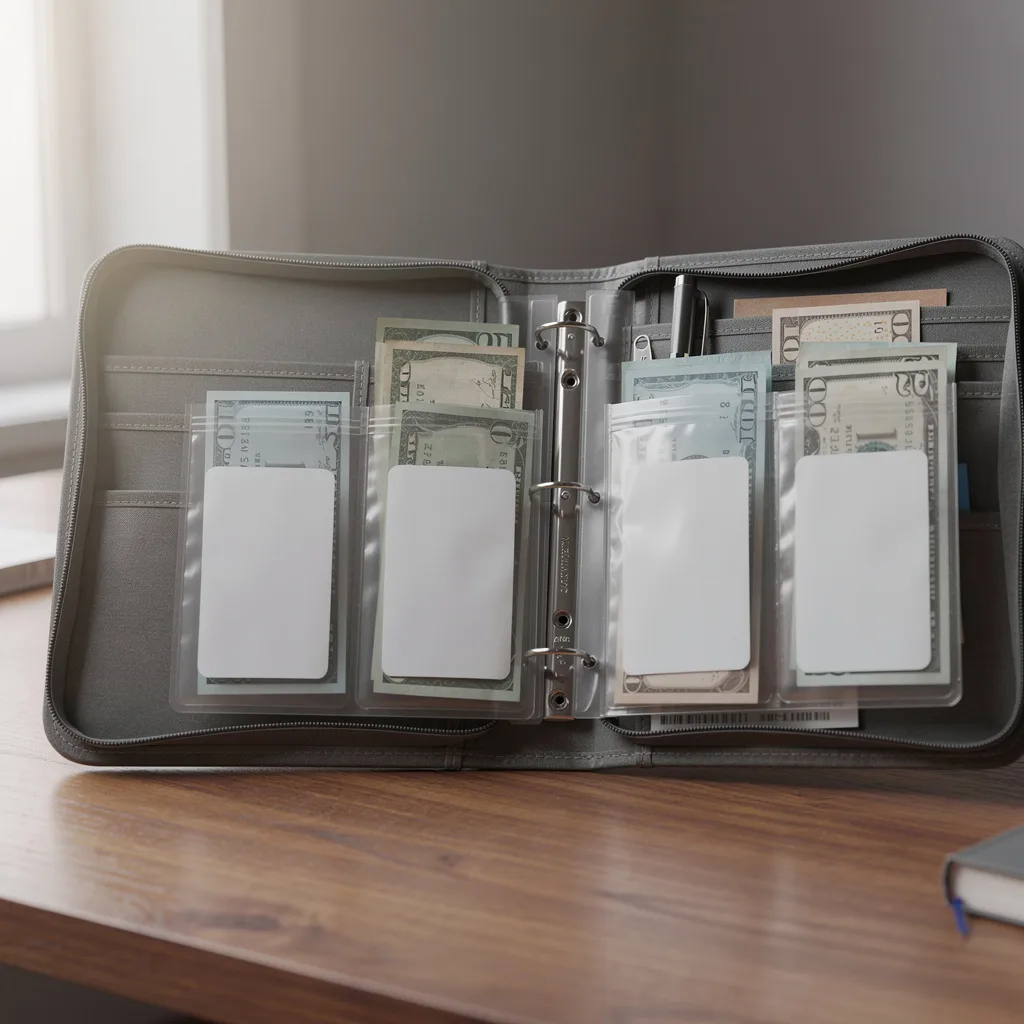
Cash vs. Digital Envelopes — Which to Use
The biggest challenge with pure cash stuffing in 2026 is that most transactions are electronic — online shopping, subscriptions, bills. Physical cash can't handle those. That's why the choice isn't really cash-or-digital; for most people it's a hybrid.
Cash envelopes
- Maximum "pain of paying" — spend 12–18% less
- Visual, tangible limit you can see
- Great for groceries, dining, personal spending
- Best for breaking an overspending habit
- Can't handle online purchases or bills
- Carrying cash has some risk
Digital envelopes
- Apps: YNAB, Goodbudget, EveryDollar
- Handles online purchases, bills, savings
- Practical for a cashless world
- Automatic tracking and reports
- Less "pain of paying" friction
- Works with cards you already use
The smartest 2026 setup is a hybrid: Use physical cash envelopes for the categories where overspending hurts you most — usually groceries, dining out, and personal spending. Keep bills, savings, sinking funds, and online purchases in bank accounts or a digital app. This gives you the powerful "pain of paying" effect exactly where you need it, while keeping the convenience of digital payments for everything else. You don't have to choose one or the other.
The Envelope Method vs. Other Budgeting Systems
Envelope budgeting isn't the only approach, and it pairs well with broader frameworks:
- The 50/30/20 rule sets your big-picture percentages (needs, wants, savings). Envelopes can manage the "wants" spending within that framework.
- Zero-based budgeting assigns every dollar a job — envelope budgeting is essentially a hands-on, visual way to execute a zero-based budget.
- Apps that do envelope budgeting digitally are covered in our best budgeting apps guide — YNAB and Goodbudget both use the envelope model.
If you tend to overspend and want the most tangible possible control, envelopes are one of the most effective methods available. If you already save consistently and just want a framework, the 50/30/20 rule may be simpler.
Common Mistakes to Avoid
The #1 mistake: too many envelopes. Starting with 12 categories makes the system feel complicated and unsustainable, and most people quit within weeks. Begin with 5–7, master the habit, then add more only if you need to.
- Trying to put every expense in cash. Cash stuffing works for variable spending you can realistically pay in cash — not for every bill. Keep fixed bills and savings in accounts.
- Borrowing between envelopes constantly. The occasional conscious reallocation is fine, but if you're always robbing the gas envelope to cover dining out, your amounts are wrong — adjust them.
- Keeping large emergency savings in cash. Your emergency fund and sinking funds belong in a high-yield savings account earning interest, not in an envelope earning nothing and exposed to loss.
- Treating it as permanent if it's not working. Cash stuffing can be a short-term reset to break a habit. Once you've built discipline, transitioning to a digital system is completely valid.
Frequently Asked Questions
What is the envelope budgeting method?
It's a system where you divide your money into spending categories — "envelopes" — before you spend it. Each category gets a set amount, and when that envelope is empty, you stop spending in that category until it's refilled. The original version used physical cash in labeled envelopes (now called "cash stuffing"), but it also works with digital envelopes, apps, or separate accounts. The hard stop when an envelope is empty is what separates it from simple expense tracking.
What is cash stuffing and how is it different from envelope budgeting?
Cash stuffing is the physical-cash version — putting actual bills into labeled envelopes. Envelope budgeting is the broader concept of dividing money into categories before spending, which can be done with paper, spreadsheets, apps, or bank accounts. Cash stuffing is one way to do envelope budgeting. It adds the "pain of paying" effect, where handing over physical cash makes you spend more carefully than swiping a card.
Does the envelope budgeting method actually work?
Yes, for the right person. Research shows people spend 12–18% less with cash than cards because of the "pain of paying." It works especially well for people who overspend with cards, want a visual system, or need a short-term reset. It's less practical for electronic payments, so many people use a hybrid: cash for variable categories like groceries and dining, accounts for bills and savings.
How many envelopes should I start with?
Start with 5–7 categories — the most common mistake is too many envelopes. Focus on variable categories where you overspend: groceries, gas, dining out, entertainment, personal spending. Fixed expenses like rent don't need envelopes. Once the habit is established after a month or two, add more if needed. Too many envelopes makes the system feel complicated and is the top reason people quit early.
Can I do envelope budgeting digitally?
Yes. Apps like YNAB, Goodbudget, and EveryDollar replicate the envelope system digitally, and some people use multiple bank accounts as digital envelopes. Digital is far more practical for electronic transactions, bills, and savings. The trade-off is losing some "pain of paying" friction. A common hybrid keeps cash for overspending-prone categories and uses digital envelopes for everything else.
Sources & References
- Wealthvieu — Envelope Budgeting Method Complete Guide (2026): people spend 12–18% less with cash; start with 5–7 categories
- The Penny Hoarder — Cash Envelope System: How It Works + Cash Stuffing Tips
- Ramsey Solutions — How to Budget With the Cash Envelope System (March 2026)
- EnvelopeBudgeting.com — Cash Stuffing vs Envelope Budgeting: the distinction explained
- Surplus — What Is Cash Stuffing 2026: hybrid approach; Fidelity, NerdWallet, Experian references
- Firstcard — Envelope Budgeting Method Explained (May 2026): YNAB, Goodbudget, EveryDollar digital versions