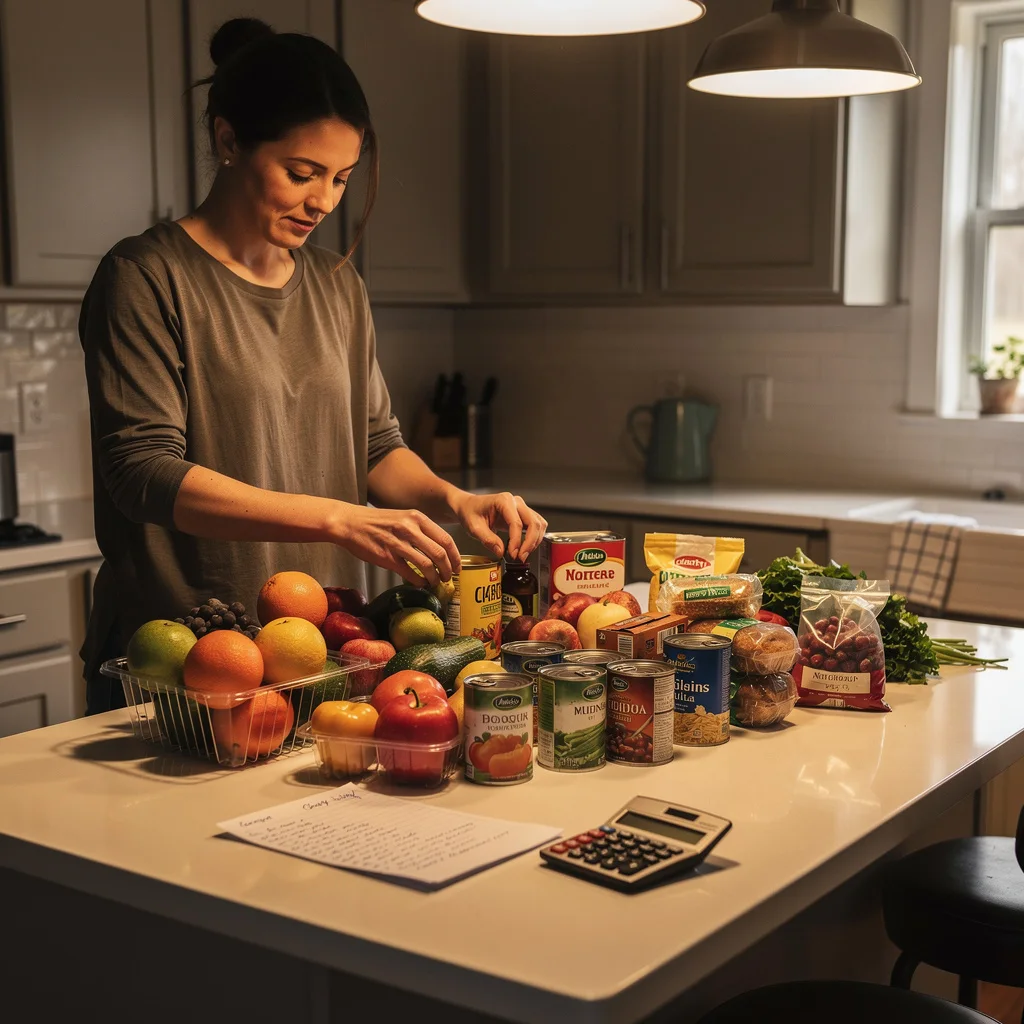
The most impactful ways to save money on groceries in 2026: meal plan before you shop (saves $100–$200/month by eliminating waste and impulse purchases), switch to store brands on staples (saves 20–40% per item), shop at discount grocers like Aldi or Lidl (saves $100–$130/month vs. traditional supermarkets), and use a store loyalty app for personalized deals. Combined, these four strategies alone can realistically cut a household grocery bill by $150–$300 per month.
How to Save Money on Groceries — The Real Numbers in 2026
Food inflation has slowed — grocery prices rose 2.3% in 2025, down from the 9.9% peak in 2022, according to USDA Economic Research Service data. But the cumulative damage is real: since February 2020, grocery prices have increased 29% overall. Eggs rose 21.9% in 2025 alone. Beef and veal jumped 11.6%.
The strategies below are ranked by actual dollar impact — not by how easy they are to write about. Some of the most popular grocery advice (clip coupons! use cashback apps!) delivers minimal savings relative to the time invested. The strategies at the top of this list are the ones that move the needle most.
The 14 Best Strategies to Save Money on Groceries — Ranked by Impact
Meal planning is the single highest-impact grocery strategy available — not because it helps you find deals, but because it eliminates the two biggest sources of grocery waste: buying food you don't use and buying food without knowing what you'll make with it.
The EPA estimates Americans waste $728 per person per year on food purchased but never eaten — roughly $61/month per person. A family of four wastes nearly $2,900 annually. Meal planning attacks this directly. When you know what you're making Monday through Sunday before you enter the store, you buy exactly what you need and nothing more.
How to do it: Every Sunday, plan 5–6 dinners for the week. Check what's already in your fridge and pantry first. Build your shopping list from the plan — not from memory. Shop once per week instead of multiple trips (each extra trip adds $20–$40 in impulse purchases on average).
Where you shop matters more than what coupons you clip. Aldi and Lidl price their products 20–40% below traditional supermarkets on comparable items. A 2025 Dunnhumby retail preference study found Aldi customers save an average of $131 per month compared to shopping at a traditional supermarket.
The trade-off is a smaller selection, no name brands, and a bring-your-own-bag policy. But for the 80% of your grocery list that's staples — produce, dairy, meat, eggs, dry goods, canned goods, frozen vegetables — discount stores deliver identical quality at dramatically lower prices. Even Walmart consistently prices 10–15% below traditional supermarkets on most items.
The hybrid approach: Do your main weekly shop at Aldi or Lidl. Use a traditional supermarket or specialty store only for the specific items your discount store doesn't carry. Most households find they visit the traditional store once or twice a month at most.
Store-brand and generic products cost 20–40% less than name brands and are often manufactured by the same companies using identical formulations. Consumer Reports testing consistently finds no meaningful quality difference in: canned goods, dried pasta, flour, sugar, salt, spices, frozen vegetables, dairy products, paper goods, and cleaning supplies.
On a $600/month grocery bill with 60% name brands, switching those items to store brands saves roughly $72–$144 per month — without changing a single thing you eat.
Where brand sometimes matters: Taste-sensitive categories like condiments, snack foods, and certain beverages. But even here, try the store brand once — most people can't tell the difference on items they use for cooking versus eating directly.
Every major grocery chain has a free loyalty app that offers personalized digital coupons, weekly deals, and cash-back offers. Kroger, Safeway, Publix, Target, and Walmart all have apps that clip digital coupons in seconds — no scissors required.
The key distinction: don't just browse deals and buy what's on sale. Load the coupons for items already on your shopping list. This keeps you from buying something you don't need just because it's discounted. Used this way, loyalty apps typically save $30–$60/month for an engaged shopper with minimal time investment.
Ibotta is worth adding alongside your store app — it offers cash-back rebates on specific items at most major retailers. Scan your receipt after shopping and earn cash-back that deposits to PayPal or Venmo. Average active user saves $20–$30/month.
Meat and poultry are typically the most expensive items in any grocery cart. Buying in bulk from warehouse stores (Costco, Sam's Club) or on sale at your regular store and freezing immediately can reduce per-unit protein costs by 30–50%.
Chicken breasts, ground beef, and pork loin bought in family packs and frozen in individual portions often cost 40% less per pound than buying the same amount in smaller packages. USDA data shows beef and veal prices rose 11.6% in 2025 — buying ahead on sales becomes even more valuable when prices are climbing.
What freezes well: All raw meat and poultry (up to 6–12 months), bread and baked goods, cheese, butter, many cooked meals. Portion and label before freezing so nothing gets lost or forgotten.
You don't need to go vegetarian to save significant money on protein. Simply reducing the meat portion in meals from 6–8 oz to 3–4 oz and supplementing with beans, lentils, or eggs cuts protein costs dramatically. Dried lentils cost roughly $1.50/lb versus $8–$12/lb for beef — and provide comparable protein per serving.
One or two meatless dinners per week, or "stretching" meat dishes with legumes (chili, soups, stews, pasta sauces), can save a family of four $30–$60 per month without anyone noticing a dramatic change in what they're eating.
Out-of-season produce costs 2–3x more than the same item in season and often tastes worse. Strawberries in January are $5/lb. Strawberries in June are $1.99/lb. The same is true for tomatoes, corn, peppers, and most fruits.
A simple seasonal buying guide: in spring, buy asparagus, peas, spinach, and strawberries. Summer is for tomatoes, corn, cucumbers, and peaches. Fall brings apples, squash, and sweet potatoes. Winter is for citrus, potatoes, and root vegetables. Buying in season and in larger quantities (with freezing) optimizes both cost and flavor.
When produce is on sale, buy more than you need for the week and cook or freeze the excess. A bag of spinach that's $0.99 on markdown is a better deal bought for $1.99 at peak freshness — especially if you'd otherwise throw half of it away.
The Empower Personal Dashboard data shows Americans spend an average of $879/month at restaurants. Even replacing one restaurant meal per week with a home-cooked alternative saves $40–$80/month — because the same ingredients that cost $8 at a grocery store become a $35 restaurant bill per person.
This isn't about never eating out. It's about being intentional. One extra home-cooked dinner per week adds up to $480–$960 in annual savings for a household that eats out regularly.
Shopping hungry reliably increases spending by 15–30%. Research published in JAMA Internal Medicine found hungry shoppers buy more high-calorie foods and spend more overall than the same shoppers when satiated. Eat something before you go — even a small snack.
Shopping without a list leads to an estimated $20–$40 in unplanned purchases per trip. With a list, you shop with intention. Without one, you're essentially wandering through the store making real-time decisions about what looks good — which is exactly what grocery store design is optimized to exploit.
The price on the shelf tag is misleading without the unit price. A 24 oz jar of pasta sauce for $4.49 looks cheaper than a 32 oz jar for $5.49 — until you calculate that the larger jar costs $0.17/oz versus $0.19/oz. The shelf label typically shows the unit price in small print. Read it.
This matters most for items you use regularly: cooking oils, condiments, canned goods, cleaning products, paper goods. Switching to the better unit-price option on 10 items per week can save $15–$30/month with zero change to what you're eating.
Most food waste happens because people forget what they have and buy more before using what's already there. The fix is simple: designate a "use first" shelf in your fridge for items closest to expiration. Check this shelf before planning meals each week. Cook with what's about to go bad before buying anything new.
Proper storage extends produce life significantly: leafy greens stored with a paper towel to absorb moisture last twice as long. Herbs stored upright in a glass of water last 1–2 weeks instead of 3–4 days. Bread stored in the freezer instead of the counter never gets moldy.
Eggs remain one of the cheapest complete protein sources available despite the price spike in early 2025 (which has since partially reversed). A dozen eggs provides 12 servings of high-quality protein for $2.50–$4.00 — roughly $0.25–$0.33 per serving. Chicken breast costs $1.50–$2.50 per serving. Ground beef, $2.00–$3.50.
Dried beans and lentils cost $0.10–$0.20 per serving of protein — literally 10x cheaper than meat. They require cooking time but almost no active effort. A $2 bag of dried lentils provides 10+ servings and keeps indefinitely. Making beans and lentils a regular part of your protein rotation is one of the most cost-effective dietary changes available.
Shopping online for grocery pickup eliminates the in-store environment that's specifically designed to trigger impulse purchases. You can see your cart total in real time, easily remove items, and stick to your list without walking past tempting displays.
Most major grocery chains offer free pickup if your order exceeds a minimum (typically $35–$50). Even with a small pickup fee, many households save more in avoided impulse purchases than the fee costs. An added benefit: online ordering lets you easily compare prices and find substitutions for expensive items.
A spending limit only works if you know what you're actually spending. Before your next grocery trip, set a weekly target that's 15–20% below what you've been spending. Check your cart total on your phone as you shop. When you approach the limit, start making decisions — put back the items that are nice-to-have rather than need-to-have.
The act of setting a number and tracking against it consistently produces savings of $20–$50/month — not because you buy less food, but because you make more deliberate choices about what goes in the cart.
How Much Can You Realistically Save on Groceries?
| Strategy | Monthly savings estimate | Effort required |
|---|---|---|
| Meal planning + shopping once/week | $100–$200 | Low — 30 min/week |
| Switch to discount grocer (Aldi/Lidl) | $100–$131 | Low — one-time change |
| Switch to store brands on staples | $50–$100 | Very low |
| One extra home-cooked meal/week | $50–$100 | Medium |
| Buy proteins in bulk and freeze | $40–$80 | Low |
| Reduce meat portions + add legumes | $30–$60 | Low |
| Use loyalty app + Ibotta | $30–$60 | Very low |
| Buy seasonal produce | $20–$40 | Low |
| Reduce food waste | $20–$60 | Low |
| Shop with a list, not hungry | $20–$50 | Very low |
Using all strategies above simultaneously isn't realistic — but implementing four or five consistently can realistically reduce a household's grocery bill by $200–$400 per month. On a $667 average monthly grocery bill, that's a 30–60% reduction.
The real benchmark: Compare your grocery spending to the USDA moderate-cost food plan for your household size. If you're spending more than 20% above that benchmark, you have clear room to cut. If you're at or below the USDA moderate plan, you're already doing well — focus on the waste-reduction strategies rather than the quantity-reduction ones.
Frequently Asked Questions
How much should I spend on groceries per month?
According to USDA food plan data for 2026, a single adult should spend $392–$465/month (moderate-cost plan). A family of four should budget approximately $1,250–$1,430/month. The BLS reports the average U.S. household spends $504/month on food at home. If you're spending more than 20% above the USDA moderate plan for your household size, there's likely room to cut.
What is the number one way to save money on groceries?
Meal planning before you shop is consistently the highest-impact strategy. People who shop with a meal plan and grocery list waste significantly less food — the EPA estimates Americans waste $728 per person annually on food never eaten. Combining meal planning with a store loyalty app and store-brand swaps can realistically cut a household's grocery bill by $150–$250 per month.
Is buying generic brands worth it?
Yes, in most cases. Store-brand and generic items are typically 20–40% cheaper and are often made by the same manufacturers using identical ingredients. Consumer Reports finds no meaningful quality difference for canned goods, pasta, flour, sugar, frozen vegetables, dairy, and cleaning products. The exceptions are taste-sensitive items where you have a strong personal preference.
How much does the average American waste on groceries?
The EPA estimates Americans waste approximately $728 per person per year on food purchased but never consumed — roughly $61/month per person. For a family of four, that's nearly $2,900 annually. The primary causes are buying produce without a meal plan, purchasing more than needed, and poor storage habits that accelerate spoilage.
Does shopping at discount grocery stores really save money?
Yes — significantly. Aldi and Lidl price 20–40% below traditional supermarkets on comparable items. A 2025 Dunnhumby study found Aldi customers save an average of $131/month versus shopping at a traditional supermarket. The trade-off is a smaller selection and no name brands — but for everyday staples, discount stores deliver the same quality at dramatically lower prices.
Sources & References
- USDA Economic Research Service — Food Prices and Spending, 2025–2026 (food-at-home CPI: +2.3% in 2025, cumulative +29% since 2020)
- USDA — Official Food Plans: Cost of Food Reports, January 2025
- Bureau of Labor Statistics — Consumer Expenditure Survey, 2024 (average household: $504/month food at home)
- Empower Personal Dashboard — Tracking America's Food Spending, 2025 ($667/month average grocery spending)
- EPA — Sustainable Management of Food, 2025 ($728 per person annually in food waste)
- The Harris Poll / Flashfood — Americans Fight Inflation By Cooking At Home, February 2026 (81% prioritize food savings)
- Dunnhumby — Retail Preference Index, 2025 (Aldi saves customers avg. $131/month vs. traditional supermarkets)
- NerdWallet — Average Grocery Cost Per Month, March 2026