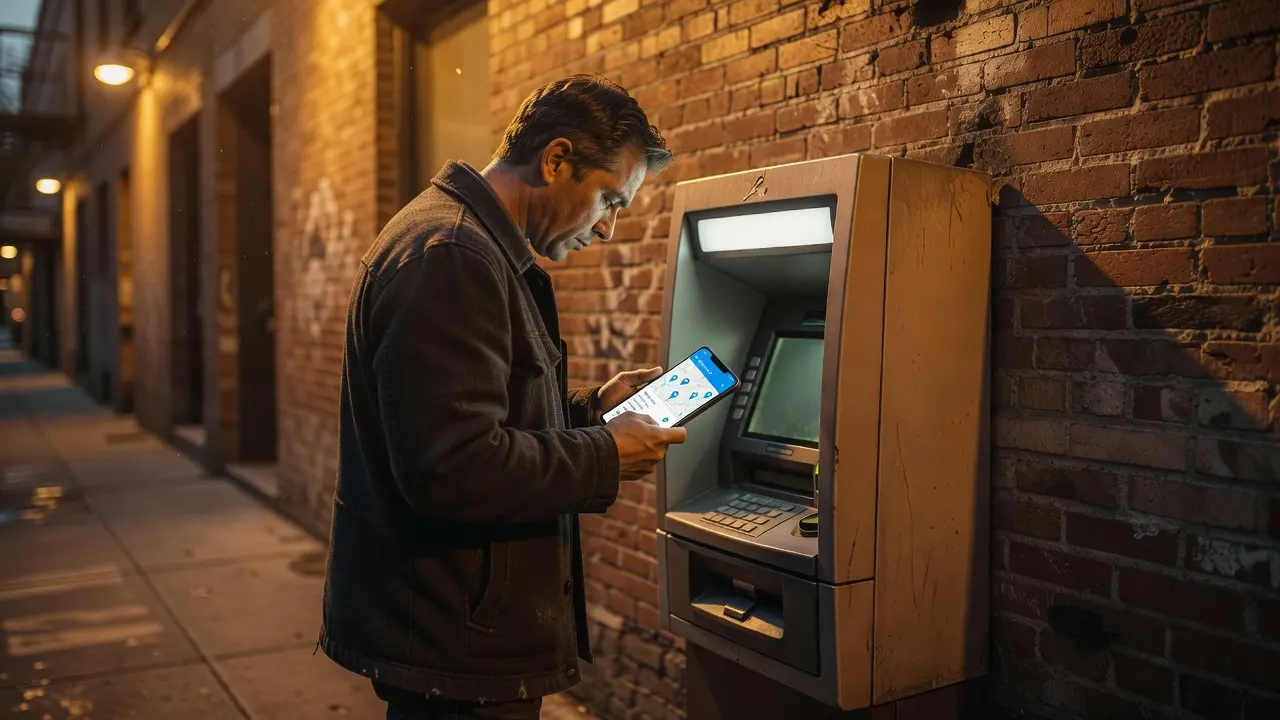
Out-of-network ATM fees average nearly $5 per withdrawal (your bank's fee + the ATM owner's surcharge). Avoid them by: (1) using in-network ATMs (find them in your bank app); (2) getting cash back at checkout (usually free); (3) withdrawing larger amounts less often; (4) choosing a bank that reimburses ATM fees (common with online banks); (5) using a teller; (6) using digital payments to need less cash; (7) planning ahead. Watch for 1–3% foreign fees abroad.
What ATM Fees Actually Cost
When you use an ATM outside your bank's network, you typically get hit with two separate charges: a fee from your own bank for going out-of-network, and a surcharge from whoever owns the ATM. Together they've climbed to a record high.
Average out-of-network ATM fee
Nearly $5 for a single withdrawal may not feel like much in the moment, but it adds up fast — use the wrong ATM once a week and you'll pay around $250 a year just to access your own cash. These fees have risen steadily as fewer people use cash and operators charge more to keep machines profitable. Here's how to stop paying them.
7 Ways to Avoid ATM Fees
Use in-network ATMs
The number-one fix: use ATMs owned by your bank or credit union — those are free. Many banks (especially online ones) also partner with big surcharge-free networks like Allpoint or MoneyPass, giving you tens of thousands of fee-free machines. Use your bank's app or website to find the nearest in-network ATM before you need cash.
Get cash back at checkout
When you pay with your debit card at grocery stores, pharmacies, and big-box retailers, you can usually request cash back for free. It comes straight from your checking account with no ATM surcharge. A few retailers (some dollar stores) charge a small fee, so check — but for most stores it's the easiest free cash there is.
Withdraw larger amounts, less often
ATM fees are usually the same whether you take out $20 or $200. So if you must use an out-of-network machine, take out more at once to cut the number of fee-charging trips. Just mind your daily withdrawal limit (often $500–$1,000) and keep the cash somewhere safe.
Choose a bank that reimburses fees
Many banks and credit unions — especially online banks — offer checking accounts that automatically refund out-of-network ATM fees, sometimes unlimited, sometimes capped around $10–$20/month. If you're often away from your bank's ATMs, this is a game-changer. Compare accounts specifically on ATM policy; our guide to free checking accounts is a good place to start.
Use a teller for in-person withdrawals
If you're near a branch, walk in and withdraw cash from a teller — it's free, secure, and you can even request specific bills. A nice option when there's no in-network ATM nearby but a branch is handy.
Go digital to need less cash
Apps like Venmo, Zelle, PayPal, and Cash App let you pay people and split bills without cash, cutting how often you need an ATM at all. One caveat: some services charge for ATM withdrawals with their own debit cards (for example, a Venmo debit ATM withdrawal runs about $2.50), so read the terms.
Plan ahead
Most ATM fees come from being caught cash-short with no in-network machine around. Keep a little cash on hand for cash-only spots, and pull out what you'll need during a planned in-network trip. A minute of planning beats a $5 surprise.
Traveling abroad? International ATM withdrawals often add a foreign transaction fee of 1%–3% of the amount, on top of the usual out-of-network and surcharge fees. Before a trip, ask your bank about international fees, check whether they have partner banks overseas, and consider a debit card or account that waives foreign fees. Using an ATM abroad still usually beats airport currency-exchange counters on the exchange rate.
One more move worth making: If you're regularly paying ATM fees, that's a sign your current account may not fit your life. It can be worth a quick call to your bank to ask about fee waivers or better account options — or switching banks altogether to one with a bigger ATM network or fee reimbursement. The same goes for other sneaky charges; see our guide to avoiding overdraft fees.
The bottom line: ATM fees are one of the most avoidable expenses in personal finance. Stick to in-network ATMs, grab cash back at the checkout, withdraw a bit more at a time, and — if you're frequently caught out — switch to an account that reimburses fees or waives them. A couple of small habits can save you well over $100 a year, all for the simple act of accessing your own money. Take two minutes to find your bank's ATM locator in its app today, and you'll rarely pay a surcharge again.
Frequently Asked Questions
How much are ATM fees?
Out-of-network ATM fees have hit a record high, averaging roughly $4.77–$4.86 per withdrawal per recent Bankrate data. That total is two charges: your own bank's out-of-network fee (averaging ~$1.58) plus the ATM owner's surcharge (~$3.14–$3.22). So one withdrawal from the wrong ATM can cost nearly $5 on top of your cash. Fees have risen for years, driven by ATM maintenance costs and fewer people using cash, so operators charge more per transaction. While $5 seems small, it adds up: an out-of-network ATM once a week runs about $250/year. International withdrawals can cost more, often adding a 1%–3% foreign transaction fee. The good news: with a little planning, these fees are almost always avoidable.
How can I withdraw cash without paying an ATM fee?
The most reliable way is to use an ATM in your bank's network — banks and credit unions don't charge for their own ATMs, and many (especially online banks) partner with surcharge-free networks like Allpoint or MoneyPass for tens of thousands of free machines. Use your bank's app to locate one before you need cash. One of the easiest free options is cash back at checkout: paying with your debit card at many grocery stores, pharmacies, and big-box retailers lets you request cash back, usually free (a few charge a small fee). You can also withdraw from a teller for free, or plan ahead so you're not forced onto a random ATM. If you're often away from in-network ATMs, switch to a bank that reimburses out-of-network fees. Combining a couple of these habits lets most people avoid fees almost entirely.
Do banks reimburse ATM fees?
Yes — many banks and credit unions, particularly online-only banks, offer checking accounts that reimburse out-of-network ATM fees, which can be one of the most convenient fixes. If you're charged at another bank's ATM, your bank credits it back, usually at the end of the statement period. Some accounts offer unlimited reimbursement; others cap it around $10–$20/month. Online banks are especially generous because they don't run branch ATM networks. Separately, many traditional banks offer premium checking accounts that waive or worldwide-reimburse ATM fees — but those often carry a monthly fee unless you meet requirements like a high balance. If ATM access matters, compare accounts specifically on their ATM fee policy. For frequent travelers or people outside their bank's footprint, a fee-reimbursing account can easily save over $100 a year.
Does getting cash back at a store have a fee?
Usually it's free, which makes it one of the best ways to avoid ATM fees. Paying with your debit card at many grocery stores, supermarkets, pharmacies, and big-box retailers lets you request cash back, and most major retailers don't charge — it comes from your checking account like a normal debit transaction with no ATM surcharge. A few things to note: some retailers (certain dollar stores, smaller shops) may charge a small fee, often $0.50–$3.50, so check. Cash-back amounts are typically limited, often $20 up to a few hundred dollars per transaction depending on the store. And you generally need to make a purchase. Even so, grabbing cash while buying groceries is convenient, saves a separate ATM trip, and sidesteps rising fees — just keep enough in your account to cover both the purchase and the cash back.
Sources & References
- Bankrate — How to Avoid ATM Fees: record-high $4.77 average (bank fee $1.58 + surcharge), fee-reimbursing accounts, cash back limits, Venmo $2.50 ATM fee
- CNBC Select — ATM Fees at Record High: $4.86 average ($1.64 bank + $3.22 surcharge), online banks and larger networks, reimbursement caps $10–$20/month
- Huntington Bank — How to Avoid ATM Fees: in-network vs affiliated vs unaffiliated ATMs, international fees 1%–3%, $242/year if weekly
- Discover — Get Cash Without an ATM Fee: use in-network ATMs, cash back at checkout, plan cash needs ahead
- Citi — How to Avoid ATM Fees or Surcharges: in-network ATMs, cash back at checkout, transfer digitally, plan withdrawals
- Navy Federal Credit Union — Forget the Fees: average ~$4.55 per withdrawal, go in-network, cash back at checkout, ATM fee rebates