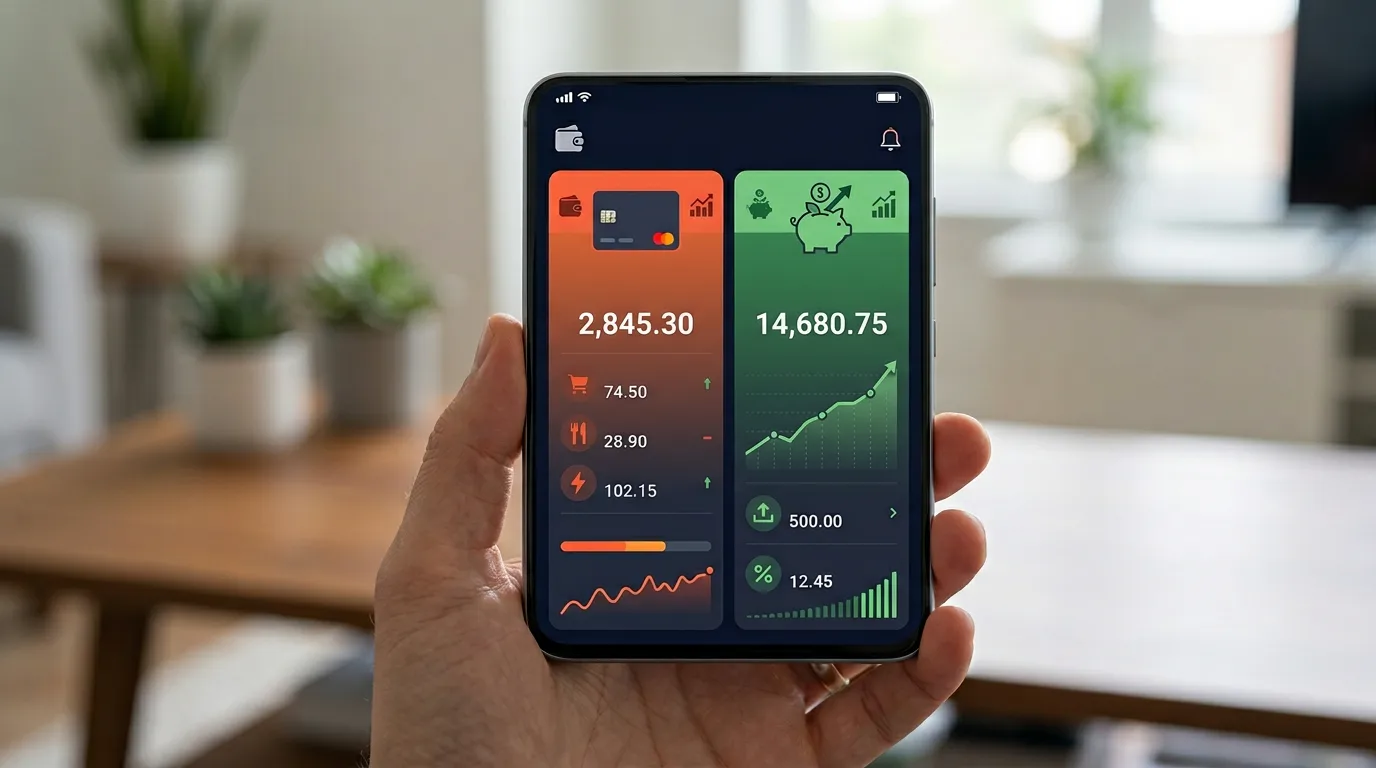
Checking = spend. Savings = store and grow. A checking account handles daily transactions — bills, debit card, direct deposit, unlimited withdrawals — and pays almost no interest (national average ~0.07% APY). A savings account holds money you don't need right away and grows it — a high-yield savings account pays 4–5% APY in 2026. Most people need both: checking for spending, a high-yield savings account for the emergency fund and goals. Keep about one month of expenses plus a buffer in checking, and 3–6 months in savings.
Checking vs Savings — The Core Difference
Both are deposit accounts at a bank or credit union, both are FDIC insured up to $250,000 per depositor, and both keep your money safe. The difference is the job each one is designed to do.
Checking Account
- Daily transactions — bills, debit card, purchases
- Unlimited withdrawals and transfers
- Comes with a debit card and checks
- Direct deposit hub for your paycheck
- Pays little to no interest (~0.07% APY)
- Built for frequent access
Savings Account
- Emergency fund and savings goals
- Earns real interest — 4–5% APY (high-yield)
- May limit withdrawals per month
- Usually no debit card
- Linked to checking for transfers
- Built for money you don't touch often
The Interest Difference — Why It Matters So Much
The single biggest practical difference between checking and savings is interest, and the gap is enormous. A checking account pays almost nothing — the national average was just 0.07% APY as of March 2026, meaning $1,000 earns about $0.70 in a year. Savings accounts pay more, and high-yield savings accounts (typically from online banks) pay dramatically more: 4–5% APY in 2026.
$10,000 held for one year — where it sits matters
Checking account (0.07% APY): earns about $7
Big-bank savings (0.39% APY national average): earns about $39
High-yield savings (4.5% APY): earns about $450
The difference between a big-bank account and a high-yield account is over $400/year — on the same $10,000, for the same safety, with the same FDIC insurance.
Online banks can offer these higher rates because they have lower overhead than traditional brick-and-mortar banks and pass the savings to depositors. The trade-off is no physical branches and external transfers that take 1–3 business days — which for most savers is well worth the higher rate. See our guide to the best high-yield savings accounts of 2026.
Full Comparison — Checking vs Savings
| Feature | Checking | Savings |
|---|---|---|
| Main purpose | Everyday spending | Storing & growing money |
| Interest (APY) | ~0.07% average | 4–5% (high-yield) |
| Debit card | Yes | Usually no |
| Withdrawals | Unlimited | May be limited per month |
| Best for | Bills, daily purchases | Emergency fund, goals |
| FDIC insured | Yes (to $250k) | Yes (to $250k) |
| Direct deposit | Yes — primary hub | Possible but less common |
How Much to Keep in Each Account
The goal is to keep enough in checking to cover your spending comfortably — but not so much that you're losing interest by leaving large sums in an account that pays near zero.
- Checking: about one month of expenses plus a 25% buffer. Enough to cover all your bills and daily spending without risking an overdraft, but not a penny more sitting idle.
- Savings: build toward 3–6 months of expenses as your emergency fund, held in a high-yield account. This is your financial safety net and it should be earning 4–5% while it waits.
Once your checking covers monthly bills with a buffer, direct everything else to savings where it earns more. Once your savings holds a full emergency fund, additional money is better invested for long-term goals rather than sitting in savings. For building that first cushion, see how to build an emergency fund from scratch.
The automation trick: Set up direct deposit into checking, then an automatic transfer to savings on payday — before you can spend it. This keeps checking lean, grows savings consistently, and removes the monthly decision of "should I save this or spend it?" The people who save reliably aren't more disciplined — they've automated the decision away.
Do You Need Both? Yes — Here's the Setup
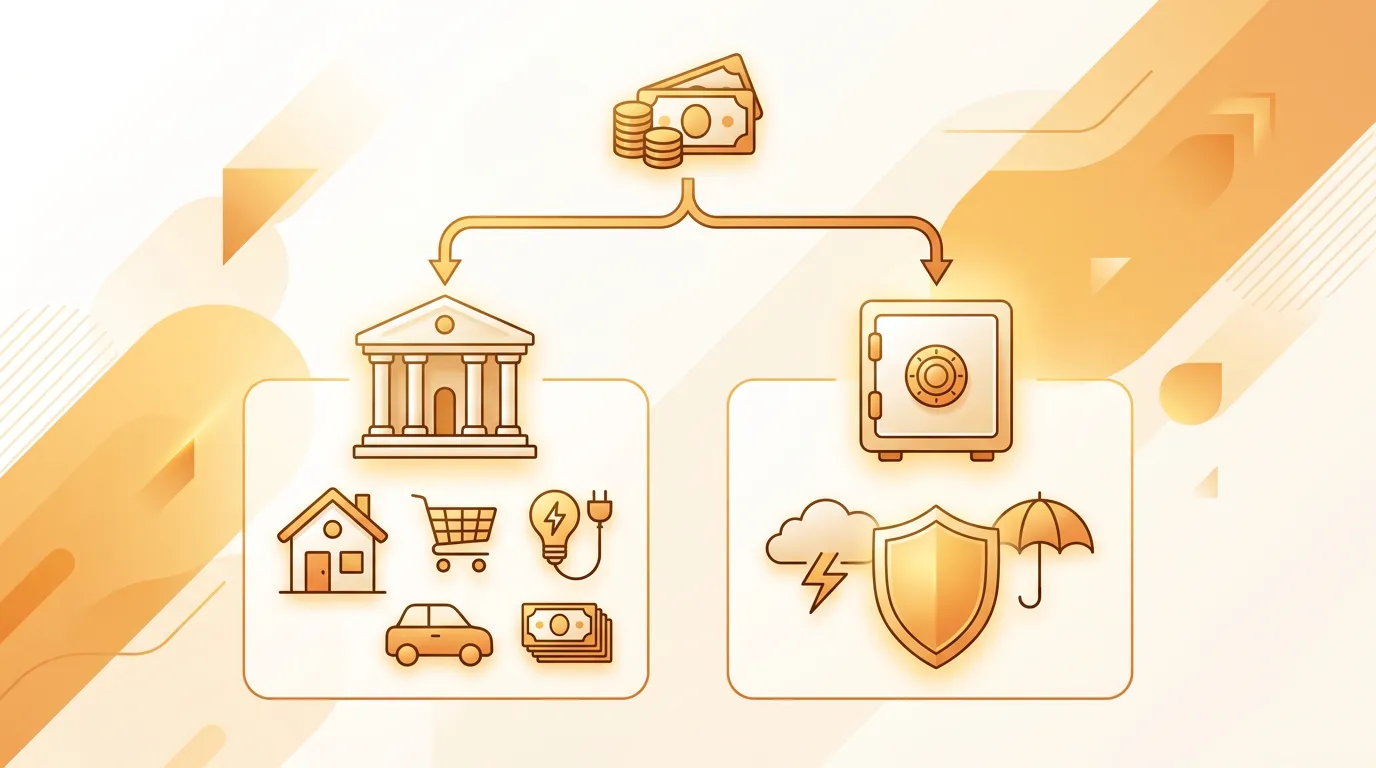
For nearly everyone, the answer is both. Each account does a job the other can't do well. Using them together is how most people manage money effectively.
A simple, effective account setup
You can open both at the same bank for instant transfers, or keep checking at one bank and savings at a high-yield online bank for the better rate. New to opening accounts? See how to open a bank account online and the best free checking accounts of 2026.
Do Savings Accounts Still Limit Withdrawals?
Not by federal law. The Federal Reserve suspended Regulation D's six-withdrawal-per-month limit in April 2020 and made the change permanent. However, many individual banks still enforce their own monthly withdrawal limits on savings accounts and may charge a fee or convert your account type if you exceed them.
What this means for you: Checking accounts have no withdrawal limits — withdraw and transfer as often as you need. Savings accounts may still cap withdrawals depending on your bank. If you anticipate needing frequent access to a chunk of money, keep it in checking. Savings is for money you don't plan to touch regularly — which is exactly why it pays more.
Other Account Types Worth Knowing
Beyond basic checking and savings, a few related accounts serve specific needs:
- Money market accounts — a hybrid that earns savings-like interest but may include limited check-writing and a debit card. Often requires a higher minimum balance.
- Certificates of deposit (CDs) — lock money for a fixed term (months to years) in exchange for a fixed rate, usually higher than savings. Early withdrawal incurs a penalty. Good for money you definitely won't need until a known date.
- High-yield checking — a small number of checking accounts pay higher rates, but usually require conditions like a minimum number of debit transactions or direct deposits per month.
For most people, the foundation is simple: one free checking account plus one high-yield savings account. Add the others only when you have a specific reason.
Frequently Asked Questions
What is the difference between a checking and savings account?
A checking account is for everyday spending — bills, debit card purchases, direct deposit, unlimited transactions. A savings account is for storing and growing money you don't need right away. The biggest difference is interest: checking pays almost nothing (~0.07% APY) while high-yield savings pays 4–5% APY. Savings may also limit monthly withdrawals. Most people benefit from having both.
Should I have both a checking and savings account?
Yes — most people benefit from both, because each does a different job. Checking handles daily transactions; savings holds money you don't need immediately and grows it at a higher rate. Keeping them separate prevents you from accidentally spending your emergency fund. A common setup is one checking account for spending plus one high-yield savings account for your emergency fund and goals.
How much money should I keep in checking vs savings?
Keep about one month of expenses plus a 25% buffer in checking, and build 3–6 months of expenses in savings as your emergency fund. Too much in checking means losing interest (near 0% vs 4–5%); too little risks overdrafts. Once checking covers monthly bills with a buffer, direct everything else to savings. Beyond a full emergency fund, consider investing for long-term goals.
Do savings accounts still limit withdrawals to 6 per month?
Not by federal law. The Federal Reserve suspended Regulation D's six-withdrawal limit in April 2020 and made it permanent. But many banks still enforce their own monthly limits and may charge a fee or convert your account if you exceed them. Checking has no such limits. If you need frequent access to money, keep it in checking, not savings.
Does a savings account earn more than a checking account?
Yes, almost always — and the gap is large. Checking averages about 0.07% APY; savings averages 0.39–0.42%; high-yield savings pays 4–5%. On $10,000 for a year, a near-0% account earns about $1–$39 while a high-yield account at 4.5% earns roughly $450–$500. Where you keep your money matters almost as much as how much you save.
Sources & References
- Chime — Checking vs Savings (April 2026): national average checking APY 0.07%
- Acorns — Checking vs Savings (2026): national average savings 0.39% APY; high-yield up to 5%; Regulation D change permanent
- NerdWallet — Checking vs Savings Accounts: The Difference (2026)
- MyBankTracker — Checking vs Savings: which earns interest (2026)
- Wealthvieu — Checking vs Savings 2026: high-yield 4–5% APY vs checking near 0%
- FDIC — National deposit rate data; deposit insurance $250,000 per depositor per bank
- Federal Reserve — Regulation D withdrawal limit suspension, April 2020 (made permanent)