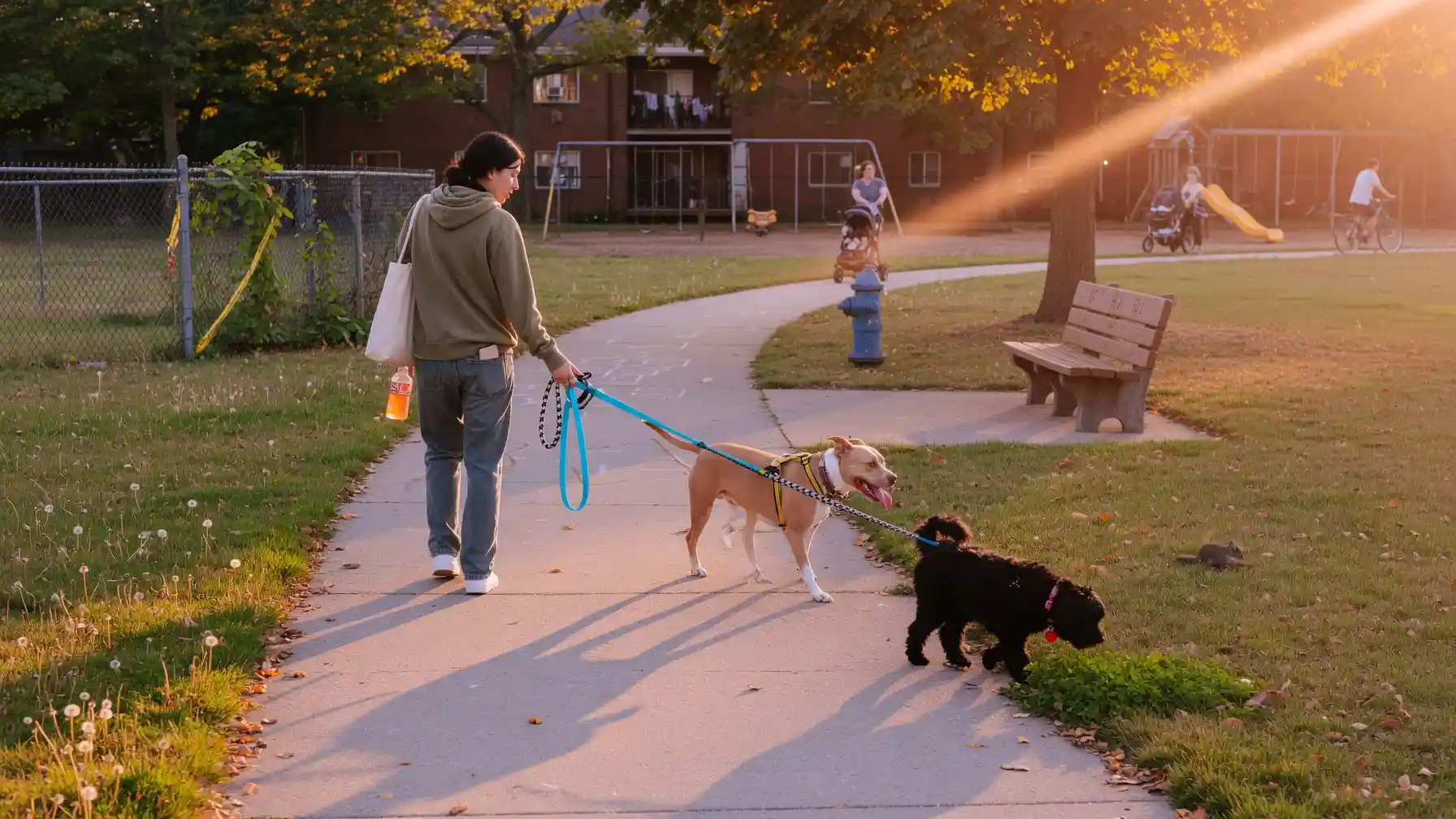
Start a dog walking business for under $200-$300: get a local business license (often $50-a few hundred dollars), pet-care liability insurance, and basic supplies (leashes, waste bags, first-aid kit). Standard 30-minute walks run $20-$30, varying by market — group walks (multiple dogs, one time block) multiply your hourly rate. No office needed; run it from home. Find first clients through door-to-door intros, flyers at vet offices/pet stores, and local Facebook groups — then let referrals take over. Overhead is low, so most of what you charge is profit.
Why This Business Works
Dog walking is one of the lowest-overhead businesses you can start. You don't need inventory, a storefront, or specialized equipment — just leashes, waste bags, and reliable transportation to get between clients. Because costs stay so low, most of what you charge falls straight to profit once your basic insurance and supplies are covered. It also scales in a genuinely simple way: group walks let you get paid separately by multiple owners for the same block of time, multiplying your hourly earnings without multiplying your hours.
What It Costs to Start
Check local licensing requirements
Contact your city or county government to find out what business license, if any, you need. Fees commonly run from about $50 to a few hundred dollars, and most need periodic renewal.
Get pet-care liability insurance
This is the one cost worth treating as non-negotiable. It covers scenarios a general policy won't: a dog injured or ill in your care, a bite, property damage, or an escape. Many clients — especially those booking through an app — expect proof of insurance before trusting you with their pet.
Set your rates and services
Decide your pricing for different walk lengths, and whether you'll offer single walks, group walks, or add-ons (feeding, basic training reinforcement, key holding).
Get essential supplies
Extra leashes, waste bags, a basic first-aid kit, and collapsible water bowls. Keep it simple starting out — you'll learn what else you need once you're in the field.
Find your first clients
Door-to-door introductions during evening hours (when owners are home), flyers with tear-off tabs at vet offices and pet stores, and local Facebook or neighborhood groups. Most competitors skip the direct, in-person approach — which is exactly why it works.
What You Can Realistically Earn
Typical dog walking rates
Because overhead stays low, dog walking businesses tend to be genuinely profitable relative to their size. Building a base of recurring clients — people who book the same days every week — produces far steadier income than relying on one-off requests, and is worth prioritizing over chasing every single booking early on.
Your dog walking starter kit
- Local business license (check requirements first)
- Pet-care liability insurance
- Extra leashes and waste bags
- Basic first-aid kit for pets
- Collapsible water bowl
- Simple scheduling/invoicing method (app or spreadsheet)
Take dog behavior seriously. You may end up legally liable for a bite or injury depending on your state's laws, even as a hired walker. Have a clear policy for handling a dog that's aggressive or doesn't get along with others, get a written agreement from clients describing the dog's temperament and emergency contacts, and don't take on a dog you're not confident handling safely.
Growing beyond solo work: Once you have more demand than you can personally handle, you can hire additional walkers and effectively run a small business rather than a one-person side hustle. This is where the real income scaling happens — your earnings stop being capped by your own available hours.
The bottom line: Dog walking is one of the most accessible ways to build real, low-overhead income — no degree, minimal startup cost, and most of what you earn stays as profit. Get licensed and insured, set fair rates for your market, stock basic supplies, and go find your first clients the direct way: in person, in your own neighborhood. Once you land a few reliable regulars, referrals and reviews do a lot of the ongoing marketing for you.
Frequently Asked Questions
How much does it cost to start a dog walking business?
One of the lowest-cost ways to become self-employed — many people can start for under $200-$300. Main initial costs: a local business license (about $50 to a few hundred dollars depending on your city/county, often needing periodic renewal) and pet-care liability insurance, a relatively small but important recurring cost given you're responsible for other people's animals. Basic supplies (extra leashes, waste bags, first-aid kit, water bowls) are inexpensive. You generally don't need a dedicated office — most dog walking businesses run from home, with a spare room or even a closet serving as the administrative base for scheduling, invoicing, and marketing. A simple website and business cards add a modest cost for a more professional look, but neither is strictly necessary to start.
How much can you make dog walking?
Varies by location and volume, but dog walking tends to be very profitable relative to its low overhead, since most of what you charge falls straight to profit once basic costs like insurance are covered. Standard 30-minute walks commonly run $20-$30, varying significantly by local market — urban areas with more demand and higher living costs generally support higher rates than less populated areas. Group walks, where you walk several dogs from different clients at once, can multiply your hourly earnings since each owner pays separately for the same time block. Individual results depend heavily on client count, local rates, and whether you eventually hire additional walkers to scale beyond your own hours. Building a base of repeat, recurring clients tends to produce steadier income than one-off bookings.
Do I need insurance to walk dogs professionally?
Requirements vary by location and aren't universally mandated by law, but pet-care liability insurance is strongly recommended and treated as essential by most professionals. When you're responsible for someone else's dog, several things can go wrong that general personal insurance typically won't cover: injury or illness in your care, a bite to a person or another animal, property damage, or an escape leading to an accident. Specialized pet-care insurance covers these scenarios specifically, and many clients — especially those booking through an app — expect or require proof of insurance. If you plan to expand into pet sitting with dogs in your own home, you may need additional property coverage. The modest cost of insurance is generally well worth it against the financial and legal risk of an uninsured incident.
How do I get my first dog walking clients?
Usually comes down to local visibility rather than broad marketing, since dog walking is an inherently local, trust-based service. Direct, door-to-door introductions — walking your neighborhood during evening hours when owners are home, introducing yourself, leaving a business card — are often more effective than expected, partly because most competitors skip this approach entirely. Flyers with tear-off contact tabs at vet offices, pet stores, coffee shops, and grocery stores reach a concentrated local audience. Local Facebook groups and neighborhood apps are another strong source, since pet owners often post directly asking for recommendations. You can also list on pet-care marketplace apps, which connect you with actively searching clients, though they typically take a commission. Once you have a few satisfied clients, referrals and reviews become your most reliable, lowest-cost source of new business.
Sources & References
- Small Biz Trends — How to Start a Dog Walking Business: licensing costs $50-few hundred, $20-$30 per 30-min walk, home-based setup
- FindLaw — How to Start a Dog Walking Business in 13 Steps: pet-care liability insurance necessity, state dog-bite liability laws, self-employment tax obligations
- Homebase — How to Start a Dog Walking Business in 2026: door-to-door client acquisition, community board marketing, local Facebook groups
- Dogster — How to Start a Dog Walking Business: home-based operations, business mailing address for privacy, scaling by hiring walkers
- Wolters Kluwer / BizFilings — How to Start a Pet Sitting and Dog Walking Business: required license types, insurance categories, services agreement essentials
- Time To Pet — How to Start a Dog Walking Business: essential starting supplies, budget planning for new walkers