
To make money on YouTube: join the YouTube Partner Program (1,000 subscribers + 4,000 watch hours, or 10M Shorts views in 90 days). Long-form ads pay $1–$6 RPM for most creators — finance and business channels see $10–$20+. But ads are just one stream: the real income comes from sponsorships, affiliate marketing, memberships, merch, and digital products — several of which you can start before you qualify for ads. Most creators get monetized in 12–24 months of consistent posting.
The YouTube Partner Program — Your First Milestone
Making money from YouTube ads starts with one gate: acceptance into the YouTube Partner Program (YPP). YouTube uses a mix of automated systems and human reviewers, and the application typically takes about 30 days. As of 2026, there are two tiers.
YouTube Partner Program requirements (2026)
1,000 subscribers AND either 4,000 valid public watch hours in the past 12 months OR 10 million valid public Shorts views in the past 90 days. This is the tier that lets you earn from ads on your videos.
500 subscribers, 3 public uploads in the last 90 days, AND either 3,000 watch hours in 12 months OR 3 million Shorts views in 90 days. This lets you earn from memberships and Super Chats before you qualify for ad revenue.
One thing to confirm first: YPP is only available in supported countries (over 120 as of 2026). If your country isn't on YouTube's eligibility list, Studio won't let you opt in even if you hit the thresholds. Check before you build.
How YouTube Pays — CPM vs. RPM Explained
Two metrics determine your ad income, and confusing them leads to wildly wrong expectations.
- CPM (Cost Per Mille) is what advertisers pay per 1,000 ad impressions — before YouTube takes its cut.
- RPM (Revenue Per Mille) is what you actually earn per 1,000 views, after YouTube's cut. This is the number that matters for your wallet.
On long-form videos, creators receive 55% of ad revenue (YouTube keeps 45%). On Shorts, creators get 45% of the Shorts revenue pool, which also accounts for music licensing costs. Here's what RPM looks like in practice:
What this means in real numbers: at a $3 RPM, you need around 334,000 views to earn $1,000 from ads. At a finance-niche $15 RPM, the same $1,000 takes only about 67,000 views. This is why niche selection is the single biggest lever on your earnings — the same effort pays very differently depending on what advertisers will pay to reach your audience.
The Shorts reality: A viral Short with 5 million views might earn only $150–$350 from the Shorts pool. Shorts are excellent for growing an audience fast, but they're a poor direct earner. The smart approach treats Shorts as top-of-funnel — they grow your subscriber base, while long-form videos and other streams do the actual earning.
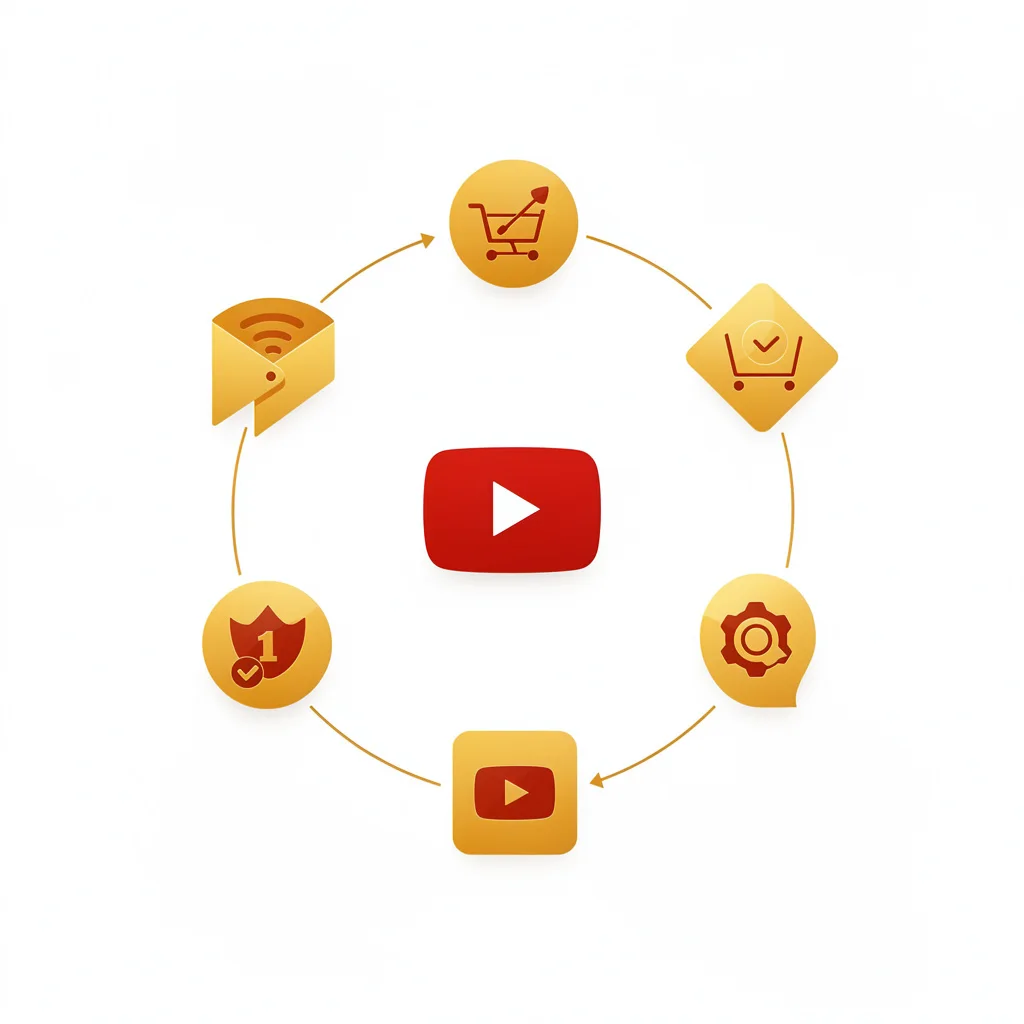
The 7 Ways to Make Money on YouTube
Ad revenue is where most people start, but it's rarely where the real money is. The creators who build sustainable income stack multiple streams — and several don't require the Partner Program at all.
Ad revenue (YouTube Partner Program)
$1–$20+ RPM · requires YPPThe foundation: ads that play before, during, and after your videos. You get 55% of long-form ad revenue. Reliable once you're in the program, but RPM varies enormously by niche and audience location. Treat it as a base layer, not the whole strategy.
Sponsorships and brand deals
Often the biggest earnerBrands pay you directly to feature their product. This is frequently the highest-earning stream for mid-size creators because you negotiate the rate directly and YouTube takes no cut. You can start pitching brands once you have a few thousand engaged subscribers — you don't need to be in the Partner Program.
Affiliate marketing
Start from video #1Recommend products with a tracked link in your description and earn a commission on sales. This works from your very first video — no Partner Program needed. It pairs naturally with review, tutorial, and "best of" content. One of the fastest ways to earn before you're monetized. See our guide to making extra money for more on affiliate income.
Channel memberships, Super Chats & Super Thanks
Fan funding · early-access tierYour audience supports you directly through monthly memberships, tips during live streams (Super Chats), and tips on regular videos (Super Thanks). Available at the early-access tier (500 subscribers), so this can be one of your first revenue streams. Works best for channels with an engaged community.
Digital products
Highest marginsSell courses, templates, presets, ebooks, or guides to your audience. Digital products have near-zero marginal cost, so margins are excellent, and you keep nearly all the revenue. Best once you've built trust in a specific niche. See passive income ideas for how to build these.
Merchandise
Scales with audience sizeBranded merch — apparel, accessories, print-on-demand items — works for channels with a strong identity and loyal fans. Print-on-demand services handle production and shipping, so there's no upfront inventory cost. More effective for personality-driven channels than faceless ones.
YouTube Shopping
Tag products in videosTag your own or affiliate products directly in your videos and shorts so viewers can buy without leaving YouTube. Useful for creators who review or demonstrate physical products. Reduces friction between a recommendation and a sale.
How Long It Takes to Start Earning
Most creators get monetized within 12 to 24 months of consistent posting. The timeline depends on how fast you reach 1,000 subscribers and 4,000 watch hours — which comes down to your niche, upload consistency, and how well your videos are optimized for search and suggestions.
But here's the key reframe: you don't have to wait for the Partner Program to start earning. Affiliate marketing works from your first video. Brand deals become possible at a few thousand subscribers. Digital products can be sold to any audience size. The creators who build real businesses begin earning through these streams while they're still working toward the ad-revenue threshold — so ad revenue becomes the cherry on top of an already-diversified income, not the entire plan.
How to Optimize Your Channel for Earnings
Niche selection matters more than anything
Because RPM varies so much by niche, the topic you choose can multiply your earnings for the same effort. High-CPM niches — personal finance, business, technology, software — pay several times more per view than gaming or lifestyle vlogging, because advertisers pay a premium to reach those audiences. Choose a niche you can sustain content in, but understand the earnings implications.
YouTube SEO and keywords
YouTube is the world's second-largest search engine. Videos that target what people actually search for keep earning views (and revenue) for months or years. Research keywords, write clear titles, and optimize descriptions — the same way you'd optimize a website for Google.
Consistency and upload cadence
The algorithm rewards channels that publish regularly. A sustainable schedule you can actually maintain beats an ambitious one you abandon after a month. Consistency over months is what gets you across the monetization threshold.
The honest bottom line: YouTube can become real income, but it's a long game built on consistent output, smart niche selection, and multiple revenue streams — not ad revenue alone. Treat it like building a business: expect 12–24 months before meaningful ad income, start affiliate and sponsorship income earlier, and reinvest your early earnings into better content. The channels that succeed aren't the ones with the most subscribers — they're the ones that understood monetization is seven things working together.
The Tax Side of YouTube Income
What you owe on YouTube earnings
All YouTube income — ad revenue, sponsorships, affiliate commissions, memberships, and product sales — is taxable and must be reported to the IRS.
Self-employment tax: If you earn more than $400 in net self-employment income, you file a Schedule C and pay self-employment tax of 15.3% on top of regular income tax.
Tax forms: Google issues tax documents for ad revenue, and you may receive 1099 forms from sponsors and affiliate programs once you exceed their thresholds.
Deductible expenses: Equipment, software, editing tools, and other business costs may be deductible — keep records of everything.
Best practice: Set aside 25–30% of your YouTube income for taxes, and consult a tax professional once your channel earns meaningfully.
Frequently Asked Questions
What are the requirements to make money on YouTube?
To earn ad revenue, join the YouTube Partner Program: 1,000 subscribers plus either 4,000 watch hours in 12 months or 10 million Shorts views in 90 days, following YouTube's guidelines. An early-access tier (500 subscribers, 3 uploads in 90 days, plus 3,000 watch hours or 3 million Shorts views) unlocks fan funding before ad revenue. The application takes about 30 days and is reviewed by automated systems and humans.
How much does YouTube pay per 1,000 views?
YouTube pays based on RPM (revenue per 1,000 views after its cut). Most long-form creators earn $1–$6 RPM; finance, business, and tech channels see $10–$20+. Creators get 55% of long-form ad revenue. Shorts pay much less — $0.01 to $0.07 per 1,000 views (45% of the Shorts pool). Your RPM depends on niche, audience location, and video length.
How long does it take to start making money on YouTube?
Most creators get monetized within 12 to 24 months of consistent posting, depending on how fast they reach 1,000 subscribers and 4,000 watch hours. But you don't have to wait — affiliate marketing, brand sponsorships, and digital product sales can earn from your first videos, before you qualify for ad revenue.
Can you make money on YouTube without showing your face?
Yes. Faceless formats include tutorials with screen recordings, list videos, documentary narration over stock footage, animation, compilations, and finance explainers with graphics. The monetization rules are identical whether or not you appear on camera — what matters is meeting the Partner Program thresholds. Faceless channels are very viable for ad revenue, affiliate income, and digital products.
Do you have to pay taxes on YouTube income?
Yes. All YouTube income is taxable and must be reported. If you earn over $400 in net self-employment income, you file a Schedule C and pay 15.3% self-employment tax plus income tax. Google issues tax forms for ad revenue; sponsors and affiliates may send 1099s. Set aside 25–30% for taxes and keep records of deductible business expenses like equipment and software.
Sources & References
- vidIQ — How to Monetize a YouTube Channel (March 2026): 1,000 subs + 4,000 hours; $1–$6 RPM, finance $10–$20+
- StudioBinder — YouTube Monetization Requirements 2026: 55% long-form / 45% Shorts revenue split; $2–10 RPM
- Apaya — How to Make Money on YouTube 2026: standard and early-access YPP tiers
- vidIQ — YouTube Shorts Monetization 2026: 10M Shorts views in 90 days; $0.01–$0.06 RPM
- Neal Schaffer — How to Make Money on YouTube 2026: 7 revenue streams; CPM vs RPM
- Income From Views — YouTube paid creators $70B+ over three years (Alphabet disclosures)