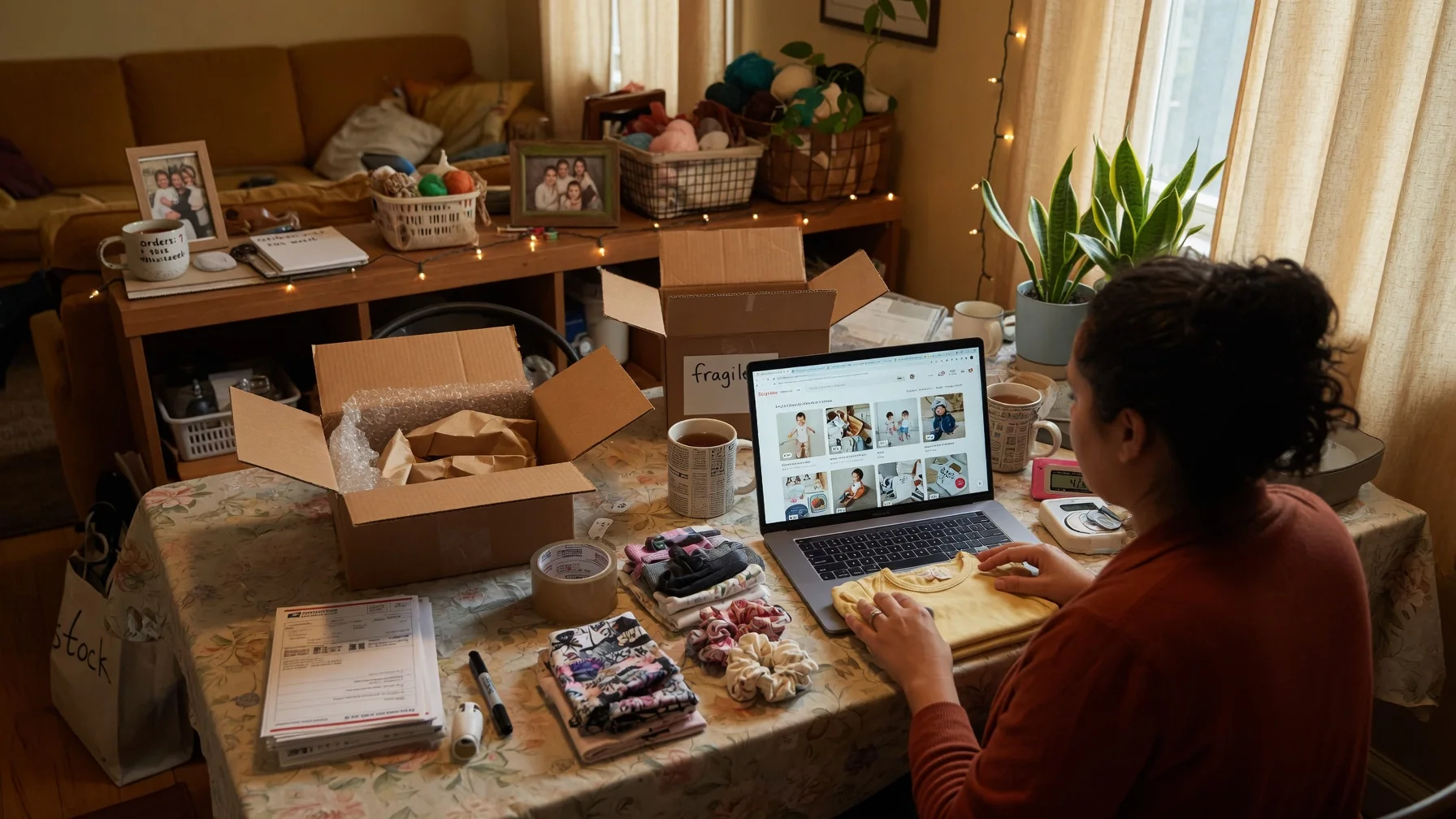
Used household items, local: Facebook Marketplace (free for local pickup). Used, collectible, or niche items to ship: eBay (~13.25% fees, huge audience). Handmade, craft, or vintage: Etsy (~10% all-in). Clothing: Poshmark (20%) or Depop (0%). Electronics: Mercari (flat 10%). New retail products at scale: Amazon. Your own brand: Shopify. Start by selling what you already own — it's pure profit with zero upfront cost.
Start With What You Already Own
Before thinking about inventory, sourcing, or building a "store," start with the fastest money available: the unused items already in your home. Most households have $300–$1,000 worth of electronics, clothing, furniture, books, and gadgets sitting unused. Selling these requires zero investment, carries no risk, and everything you earn is pure profit.
This is also the best way to learn how online selling works — photographing, pricing, listing, and shipping — before you risk any money on inventory. Once you've sold your own items and understand the mechanics, you can decide whether to scale into reselling as an ongoing way to make extra money.
The Best Platforms to Sell Online — by What You're Selling
Facebook Marketplace is the easiest place to start and the cheapest for local sales — you pay nothing when a buyer picks up in person. It's ideal for furniture, appliances, and bulky items that are expensive to ship, plus everyday used goods. The massive local audience means many items sell within 1–2 days.
The trade-offs: buyers send a lot of "is this still available?" messages, no-show rates for pickups run 20–30%, and you'll coordinate meetups (many sellers use police-station parking lots for safety). For shipped items it charges 5%. For local selling, nothing beats it.
eBay has one of the largest buyer bases anywhere and works for almost anything you can ship — used electronics, collectibles, auto parts, trading cards, vintage goods, and more. Its auction format is unique and great for rare or in-demand items where buyers bid the price up. Final value fees run around 13.25% total for most categories.
The higher fee buys you reach: for a $75 sale you keep about $65. That larger audience often sells items faster and at higher prices than lower-fee platforms with fewer buyers — which is why eBay remains a top choice despite the fee.
Etsy is the dedicated marketplace for handmade goods, craft supplies, and vintage items (20+ years old). Its buyers are specifically looking for unique, artisan, and one-of-a-kind products — buyer intent matches what makers sell. Fees stack up: a $0.20 listing fee per item (lasts 4 months), a 6.5% transaction fee, and roughly 3% + $0.25 payment processing — totaling around 10% for most sales.
If you make or curate something distinctive, Etsy's targeted audience is worth the fees. It's also a launchpad for selling digital products like printables and templates — see passive income ideas.
For clothing and accessories, these fashion-focused platforms put your items in front of buyers who are specifically shopping for style. Poshmark takes 20% on items $15+ (a flat $2.95 under $15) — high, but its social, engaged fashion audience can sell items that would languish elsewhere. Depop charges sellers 0% and skews toward vintage and streetwear with a younger audience.
For a $75 item, Poshmark's 20% leaves you $60. The fee is steep, but matching the right clothing to the right buyer pool often sells faster than a general marketplace.
Mercari charges a simple flat 10% selling fee with payment processing included and no listing fees. For a $50 item you pay $5 and keep $45. Its straightforward pricing and broad category support make it a solid all-rounder for consumer electronics, toys, and general household goods. A good middle ground between eBay's reach and Facebook's low fees.
Amazon offers unmatched reach for new, retail-style products. Its Fulfillment by Amazon (FBA) program stores, packs, and ships your inventory, making selling nearly hands-off once stock is delivered. Referral fees typically run 8–15% depending on category, plus FBA fees and an optional $39.99/month professional plan.
Amazon is more complex than the other platforms and best suited to people selling new products with supply depth, not one-off used items. Trade margin for volume — the reach is the largest available.
If you want to own the customer relationship and build a long-term brand rather than rent space on a marketplace, your own store is the answer. Shopify (from about $39/month plus payment processing) gives you a hosted, customizable storefront. WooCommerce is a free WordPress plugin if you have your own hosting.
You avoid marketplace commissions, but you're responsible for driving your own traffic — there's no built-in audience. Best once you have product-market fit and a way to reach buyers (social media, email, ads).
Seller Fees Compared — 2026
| Platform | Seller fee | Keep on $75 sale | Best for |
|---|---|---|---|
| Facebook (local) | 0% | $75.00 | Local, bulky items |
| Depop | 0% to seller | ~$75.00 | Vintage, streetwear |
| Facebook (shipped) | 5% | ~$71.25 | Shipped used goods |
| Mercari | 10% flat | ~$67.50 | Electronics, general |
| Etsy | ~10% all-in | ~$67.30 | Handmade, vintage |
| eBay | ~13.25% | ~$65.06 | Collectibles, niche |
| Poshmark | 20% ($15+) | $60.00 | Clothing, fashion |
Cheapest isn't always most profitable: A cross-listing approach — listing the same item on more than one platform and letting the market decide where it sells first — can maximize both speed and price. For high-value items, eBay's authentication and larger buyer pool can justify the higher fee through a higher final sale price than a 0%-fee platform with few buyers would deliver.
How to Sell Online — Step by Step
Pick your platform based on what you're selling
Use the guide above. Local bulky item → Facebook Marketplace. Shippable collectible → eBay. Handmade → Etsy. Clothing → Poshmark or Depop. Don't overthink it — for your first sale, the platform that matches your item is the right one.
Research what your item actually sells for
Before pricing, check completed/sold listings for the same item (eBay's "sold" filter is the gold standard). Price based on what items actually sold for, not what hopeful sellers are asking. Competitive pricing sells far faster than chasing the highest possible number.
Take clear, well-lit photos
Photos sell the item. Use natural light, a clean background, and shoot multiple angles. Show any flaws honestly — it builds trust and prevents returns. Good photos are the single biggest factor in whether an item sells and at what price. A phone camera in daylight near a window is all you need.
Write an honest, keyword-rich description
Include the brand, model, size, condition, and dimensions. Use the words a buyer would search for. Be honest about wear and flaws — accurate descriptions reduce disputes and build a good seller rating, which matters for future sales.
Ship promptly and communicate
For shipped items, send within 1–2 business days, use tracking, and pack well. Quick shipping and responsive messages earn positive reviews that build your reputation. On local sales, confirm pickup details and meet in a safe public place. Reputation compounds — good early reviews make every future sale easier.
The Tax Side of Selling Online
What you owe — and what you don't
Selling your own used items at a loss: Generally not taxable. If you sell a couch you paid $800 for at $200, that's not income — you sold it for less than you paid.
Selling for a profit or as a business: Taxable. If you flip items for resale, sell handmade goods, or sell items for more than you paid, the profit is taxable income.
1099-K forms: Platforms now issue a 1099-K if you exceed the reporting threshold for the year. The income is reported to the IRS, so keep your own records too.
Best practice: Keep records of what you paid for items and what you sold them for. Set aside money for taxes on any profit. If you're selling at volume, treat it like the business it is and consult a tax professional.
Watch your real margins: The sale price isn't your profit. Subtract the platform fee, payment processing, shipping (if you cover it), packaging materials, and taxes. An item that "sold for $50" might net $35 after a 10% fee and $5 shipping. Price with all costs in mind so your effort is actually worth it.
Frequently Asked Questions
What is the best platform to sell online for beginners?
It depends what you're selling. Facebook Marketplace is the easiest start for used household items locally — free for local pickup, instant nearby buyers. eBay is best for used, collectible, or niche items you'll ship. Etsy is the go-to for handmade and vintage. Poshmark and Depop for clothing. Amazon for new retail products at scale. Most beginners should start with Facebook Marketplace for local items or eBay for shippable goods.
How much does it cost to sell on eBay, Etsy, and Poshmark?
In 2026: eBay charges around 13.25% total. Poshmark takes 20% on items $15+ (flat $2.95 under $15). Etsy charges $0.20 per listing plus 6.5% transaction and ~3% + $0.25 processing — about 10% total. Mercari is a flat 10%. Facebook Marketplace is 5% shipped, 0% local. Depop and Vinted charge sellers 0%.
Where is the cheapest place to sell online?
For local sales, Facebook Marketplace is cheapest — nothing for in-person pickup. For shipped items, Facebook (5%) and Vinted (0% to sellers) are lowest. But cheapest isn't always most profitable: eBay's ~13.25% buys a much larger buyer pool that can sell faster and sometimes higher. For high-value items, the right audience often nets more than a low-fee platform with few buyers.
Do I have to pay taxes on what I sell online?
Selling your own used items for less than you paid is generally not taxable. But profit from flipping, reselling, or handmade goods is taxable income. Platforms issue a 1099-K if you exceed the reporting threshold. Keep records of what you paid and sold items for, and set aside money for taxes on any profit. Consult a tax professional if selling at volume.
How do I start selling online with no money?
Sell items you already own — zero upfront cost. Find unused electronics, clothing, furniture, books, and gadgets around your home. List free on Facebook Marketplace (no fees local) or eBay. Take clear photos, write honest descriptions, price by checking what similar items sold for. Everything you earn is pure profit. Once you've made money, you can reinvest into inventory if you want to scale.
Sources & References
- Voolist — Marketplace Selling Fees Compared 2026: eBay 13.25%, Poshmark 20%, Etsy 6.5%+$0.20, Depop 0%, Mercari 10%
- Voolist — Facebook Marketplace Fees 2026: 5% shipped, 0% local pickup
- SaleHoo — Best eBay Alternatives 2026: platform-by-category guide (Amazon, Facebook, Etsy, Poshmark, Depop, Whatnot, Mercari)
- Webgility — Marketplace Fees 2026: Amazon, eBay, Etsy & Walmart seller costs
- doDropshipping — 17 Best Platforms to Sell Products Online 2026 (Etsy $0.20 listing fee, platform breakdown)
- The Selling Guys — Best Online Marketplaces 2026: beginner recommendations, Amazon FBA