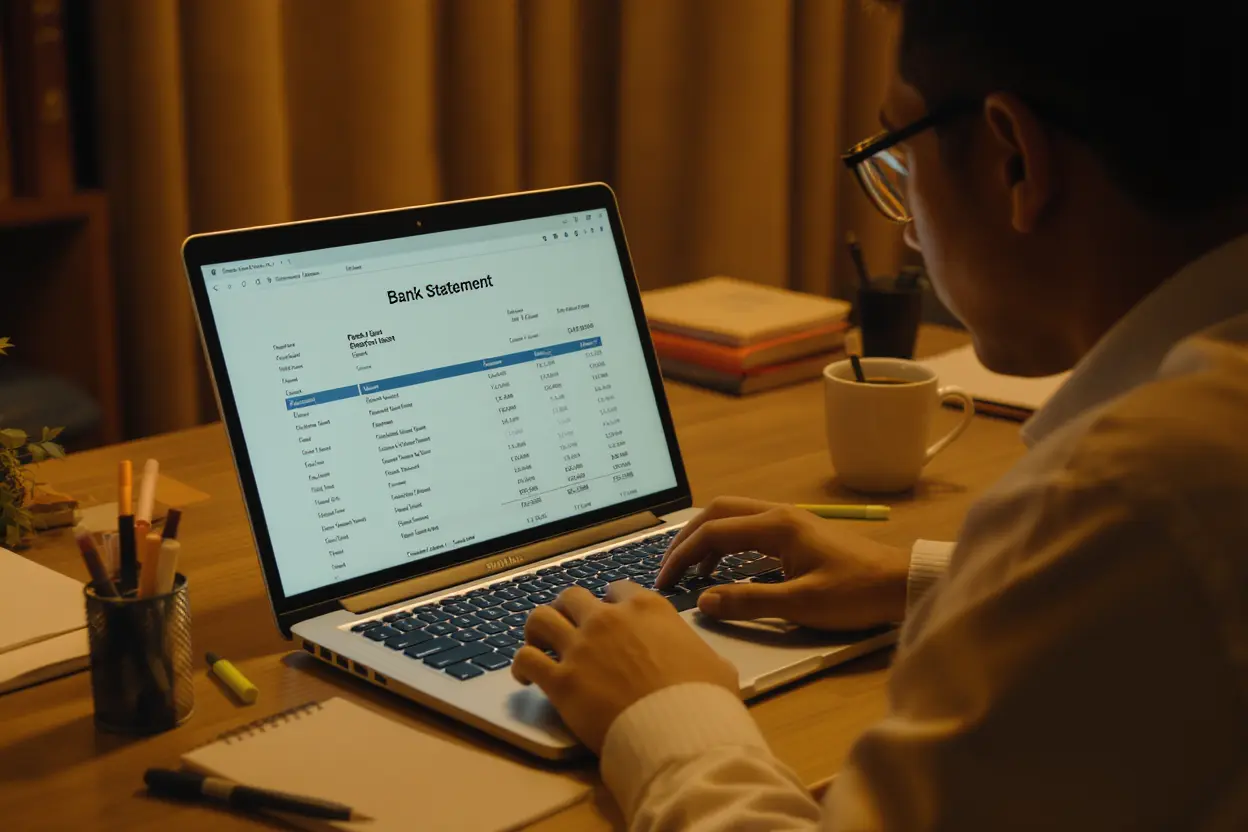
A bank statement has a few consistent sections: account info (name, account number, statement period), an account summary (opening balance, total deposits/withdrawals, closing balance), and a detailed transaction list with date, description, and running balance. Review it for unrecognized transactions (the main way fraud gets caught), unexpected fees (overdraft, maintenance, ATM), and discrepancies against your own records. Check weekly, not just monthly — your legal protection against unauthorized transactions depends on how fast you report them. If you find an error, contact your bank immediately; disputes are typically investigated within about 10 business days.
The Main Sections, Explained
Why Checking Weekly Beats Checking Monthly
Your statement itself is issued monthly, but you don't have to wait for it — most banks give you real-time or near-real-time access to transactions through online banking or a mobile app. Checking more often, ideally weekly, matters for a concrete reason: your legal protection against unauthorized transactions is directly tied to how quickly you report them. Waiting for the full monthly statement to do your only review means fraud could sit unnoticed for weeks — by which point your options may be more limited than if you'd caught it within days.
What to Actually Look For
Your monthly (or weekly) review checklist
- Unrecognized transactions — the primary way most people discover fraud
- Unexpected fees — overdraft charges, monthly maintenance, ATM surcharges
- Duplicate charges — compare against receipts or a budgeting app
- Forgotten subscriptions — recurring charges you meant to cancel
- Spending patterns — useful for refining a budget based on where money actually goes
If You Find an Error
Verify it's actually an error first
An unfamiliar merchant name is sometimes just a business billing under a different name than its storefront. A quick search of the merchant name plus your bank's name often clarifies it before you formally dispute.
Contact your bank right away
Don't wait — your protections are generally stronger the sooner you report. See our full guide on disputing a bank transaction for the exact timeline and liability tiers.
Keep records of the dispute
Date reported, who you spoke with, and any case number. Useful if the dispute takes time to resolve or needs escalation.
Most disputes are investigated within about 10 business days, and the bank may provide a provisional credit while it's ongoing. This isn't universal across every dispute type, so confirm the specific timeline with your bank.
Small "test" charges are a real fraud pattern worth watching for. Fraudsters sometimes run a tiny transaction to confirm a stolen card number works before attempting something larger. A $1-2 charge you don't recognize is worth investigating just as seriously as a large one.
The bottom line: A bank statement is more than a balance check — it's a record you're entitled to review closely, and doing so catches fraud, unexpected fees, and spending patterns you'd otherwise miss. Know the core sections, check more often than just once a month, and report anything unfamiliar right away rather than waiting. Ten minutes a week is a small habit that protects real money.
Frequently Asked Questions
What are the main sections of a bank statement?
A typical statement has consistent sections across banks, even with different layouts. Near the top: account information (name, address, account number, statement period, usually one calendar month). Below that: an account summary — opening balance, total deposits and withdrawals, fees charged or interest earned, and closing balance. The largest section is the detailed transaction list, itemizing every transaction chronologically with date, description, deposit/withdrawal indicator, and running balance after each. Some statements break out fees and service charges separately, since these can otherwise be easy to overlook buried in a long transaction list.
How often should I check my bank statement?
While the statement itself is issued monthly, checking your account far more frequently — ideally weekly or more — is a better habit than waiting for the monthly document. Most banks offer real-time or near-real-time access through online banking or a mobile app, letting you review recent activity well before the official statement generates. The reasoning: the sooner you notice an unauthorized transaction or billing error, the sooner you can report it, and federal protections around liability for unauthorized transactions on many account types are directly tied to how quickly you report after it occurs. Waiting for a monthly-only review means fraud or a pattern of smaller unauthorized transactions could sit unnoticed for weeks, by which point your options may be more limited.
What should I look for when reviewing my bank statement?
Most importantly, any transaction you don't recognize or can't immediately place — the primary way most people first discover unauthorized activity or fraud, and catching it quickly meaningfully affects your legal protections. Also check for unexpected fees (overdraft charges, monthly maintenance, ATM surcharges), which are easy to overlook individually but add up over a year if unaddressed. Compare your statement against your own records (receipts, budgeting app) to catch duplicate charges, incorrect merchant amounts, or a forgotten subscription you meant to cancel. Reviewing over time can also reveal spending patterns you might not notice day to day — genuinely useful for building or refining a budget based on where money actually goes.
What should I do if I find an error on my bank statement?
Contact your bank as soon as possible rather than waiting — your legal protections for unauthorized transactions are generally stronger the sooner you report. Most banks have a specific dispute process, typically a phone call or online banking form, after which the bank generally must investigate within a set timeframe (commonly around 10 business days for many dispute types) and may provide a provisional credit while investigating. Keep records of your communication — date reported, who you spoke with, any reference number — useful if the dispute takes time or needs escalation. If the transaction is just an unfamiliar merchant name rather than actual fraud (some businesses bill under a different name than their storefront), a quick search of the merchant plus your bank's name often clarifies it before you formally dispute.
Sources & References
- MoneyCrashers — How to Read Your Bank Statement: transaction line-item structure, spotting spending patterns, error-checking process
- DocuClipper — How to Read a Bank Statement: Sections, Example & What It Looks Like: opening/closing balance breakdown, fraud-spotting terminology
- Commerce Bank — How to Understand Your Bank Statement: account alert setup for real-time monitoring, transaction detail fields explained
- Atlantic Union Bank — How to Read a Bank Statement: common review mistakes, fraud test-charge pattern recognition
- TD Bank — What Is a Bank Statement & How to Read Them: pending vs posted transaction distinction, statement access methods
- Merchants Bank — How to Read Your Bank Statement (And Why You Should Check It Monthly): fee-section isolation strategy, deposit/withdrawal sign conventions