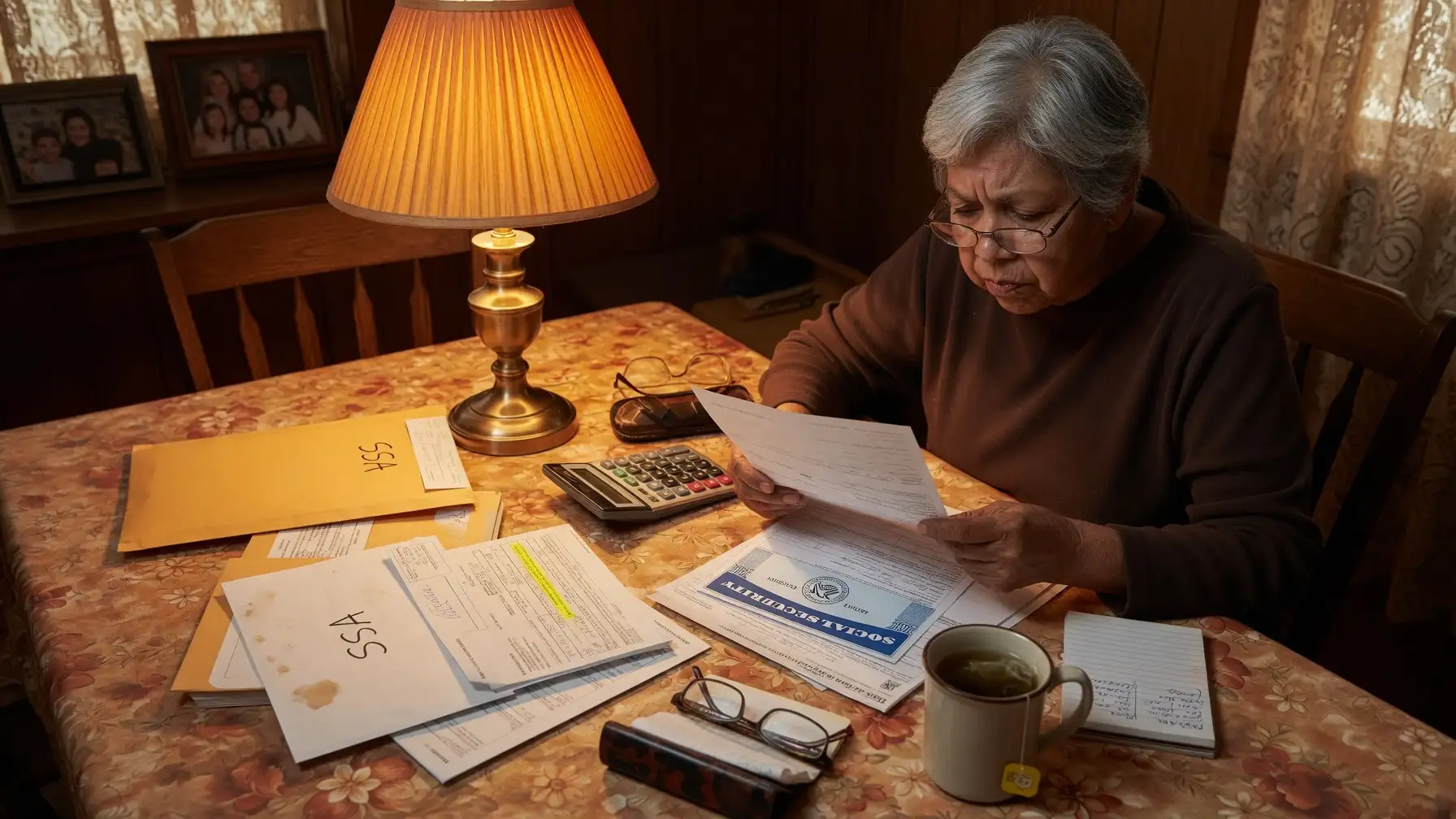
Private debt collectors generally cannot garnish Social Security — credit card debt, medical bills, and personal loans are all protected under federal law. Money can't be taken directly from your benefit; a collector would first need to sue you, win a judgment, then get a separate court order against your bank account. Banks must apply a two-month lookback rule, automatically protecting an amount equal to two months of direct-deposited benefits before any garnishment order executes. Real exceptions exist: federal taxes, defaulted federal student loans, child support, and alimony can result in benefits being reduced. A collector threatening garnishment for ordinary debt may be violating the FDCPA.
Why Social Security Is Different From a Paycheck
Money cannot be taken directly from your Social Security benefit before it's paid to you — this is fundamentally different from wage garnishment, where a court order can direct an employer to withhold money before an employee ever receives it. If a collector wants to reach Social Security funds, they must first sue you and win a judgment, then get a separate court order directed at your bank account — a meaningfully more limited process than direct benefit garnishment.
The Two-Month Lookback Rule
When a bank receives a garnishment order against an account that's received Social Security by direct deposit, federal regulations require the bank to review the previous two months of account history and automatically protect an amount equal to two months of your benefits — regardless of total balance — before any garnishment can touch the rest.
This automatic protection generally only applies cleanly with direct deposit. If you deposit a Social Security check yourself rather than using direct deposit, the bank may not be able to clearly trace which funds are protected — your entire account balance could be frozen, requiring you to go to court to prove the money came from Social Security. Direct deposit isn't just convenient; it's a real legal protection.
What Is and Isn't Protected
✓ Protected from garnishment
- Credit card debt
- Medical debt
- Personal loans
- Most other ordinary private consumer debt
✗ Real exceptions
- Federal tax debt (Federal Payment Levy Program)
- Defaulted federal student loans (Treasury offset)
- Court-ordered child support
- Court-ordered alimony
These exceptions exist because federal tax debt, federal student loans, and family law obligations are governed by different legal frameworks than ordinary consumer debt — a private credit card company simply doesn't have access to these same mechanisms.
If a Collector Threatens to Garnish Your Benefits
What to actually do
- Recognize the threat may itself be illegal — a false or misleading statement about what a collector can legally do can violate the FDCPA
- Document everything — date, collector's name, exactly what was said
- File a complaint with the CFPB or your state attorney general's office
- Consult an attorney or legal aid if you're unsure whether your specific debt falls under a real exception
The bottom line: Social Security benefits carry genuinely strong federal protection from ordinary debt collectors — this isn't a gray area or a matter of luck, it's built into the law. Use direct deposit to activate the two-month lookback protection automatically, know the real exceptions (taxes, federal student loans, child support, alimony), and recognize that a threat to garnish your benefits for ordinary debt may itself be an illegal collection tactic worth reporting.
Frequently Asked Questions
Can a debt collector take money directly from my Social Security check?
No, money cannot be taken directly from your benefit before it's paid, meaning a private collector can't instruct the Social Security Administration to withhold or redirect a portion of your monthly payment the way an employer might for wage garnishment. This differs fundamentally from wage garnishment, where a court order can require deductions before an employee ever receives their pay. Instead, a collector must first sue you, win a judgment, then get a separate court order directing your bank to turn over funds already in your account — a meaningfully more limited process. Even after deposit, federal protections generally continue to apply, provided the funds can be clearly traced back to Social Security and haven't been mixed with other money in a way that makes tracing difficult.
How does the two-month lookback rule protect my bank account?
When a bank receives a garnishment order against an account that's received Social Security by direct deposit, federal regulations require reviewing the previous two months of account history to determine how much came from protected benefits. The bank must automatically protect an amount equal to two months of your direct-deposited benefits, regardless of total balance, before any garnishment order can be executed against the rest. For example, with $1,000/month in benefits and $2,500 total when an order arrives, the bank must protect $2,000, leaving only $500 potentially available. This is precisely why direct deposit matters so much: the automatic two-month protection generally only applies cleanly when benefits arrive via direct deposit, since the bank can clearly trace which portion of your balance came from a protected federal source.
What debts are exceptions to Social Security garnishment protection?
While broadly protected from ordinary private creditors — credit card companies, medical debt collectors, personal loan lenders — several categories owed to government entities or arising from specific legal obligations represent genuine exceptions. Federal tax debt can result in reduced benefits through the Federal Payment Levy Program, operating separately from private creditor rules. Unpaid federal student loans can similarly result in withheld benefits through Treasury offset, again governed by different rules than private debt collection. Court-ordered child support and alimony represent another significant exception, since family law obligations are treated differently under federal law than ordinary consumer debt — Social Security can be garnished for these specific obligations even though it remains protected from an ordinary credit card collector.
What should I do if a debt collector threatens to garnish my Social Security?
If a collector explicitly threatens to garnish Social Security to collect ordinary private debt like credit card debt, that threat itself may violate the Fair Debt Collection Practices Act, since making a false or misleading representation about legal action a collector can actually take is generally prohibited. Document the exact threat — date, collector's name, precisely what was said — creating a record that could support a formal complaint if the statement was false or prohibited. File a complaint with the CFPB or your state attorney general's office, both of which oversee debt collection practices. If genuinely uncertain whether your specific debt falls under a real exception — federal taxes, defaulted federal student loans, child support — consulting a consumer protection attorney or legal aid organization can confirm your income remains properly protected.
Sources & References
- Consumer Financial Protection Bureau — Can a Debt Collector Take My Federal Benefits: two-month lookback rule mechanics, direct deposit protection requirements
- Debt.org — When Can Creditors Garnish Your Social Security: FDCPA violation for improper threats, state-level garnishment protections
- Kiplinger — Social Security Garnishment Rules: Section 207 Social Security Act protections, Consumer Credit Protection Act application
- Social Security Fool — Can Debt Collectors Garnish Social Security: anti-assignment clause explanation, federal offset vs private garnishment distinction
- ElderLawAnswers — Can Social Security Benefits Be Garnished to Pay Debts: bank freeze process for non-direct-deposit checks, court proof requirements
- CBS News — Can Your Social Security Benefits Be Garnished by a Debt Collector: garnishment process overview, who-the-debt-is-owed-to distinction